
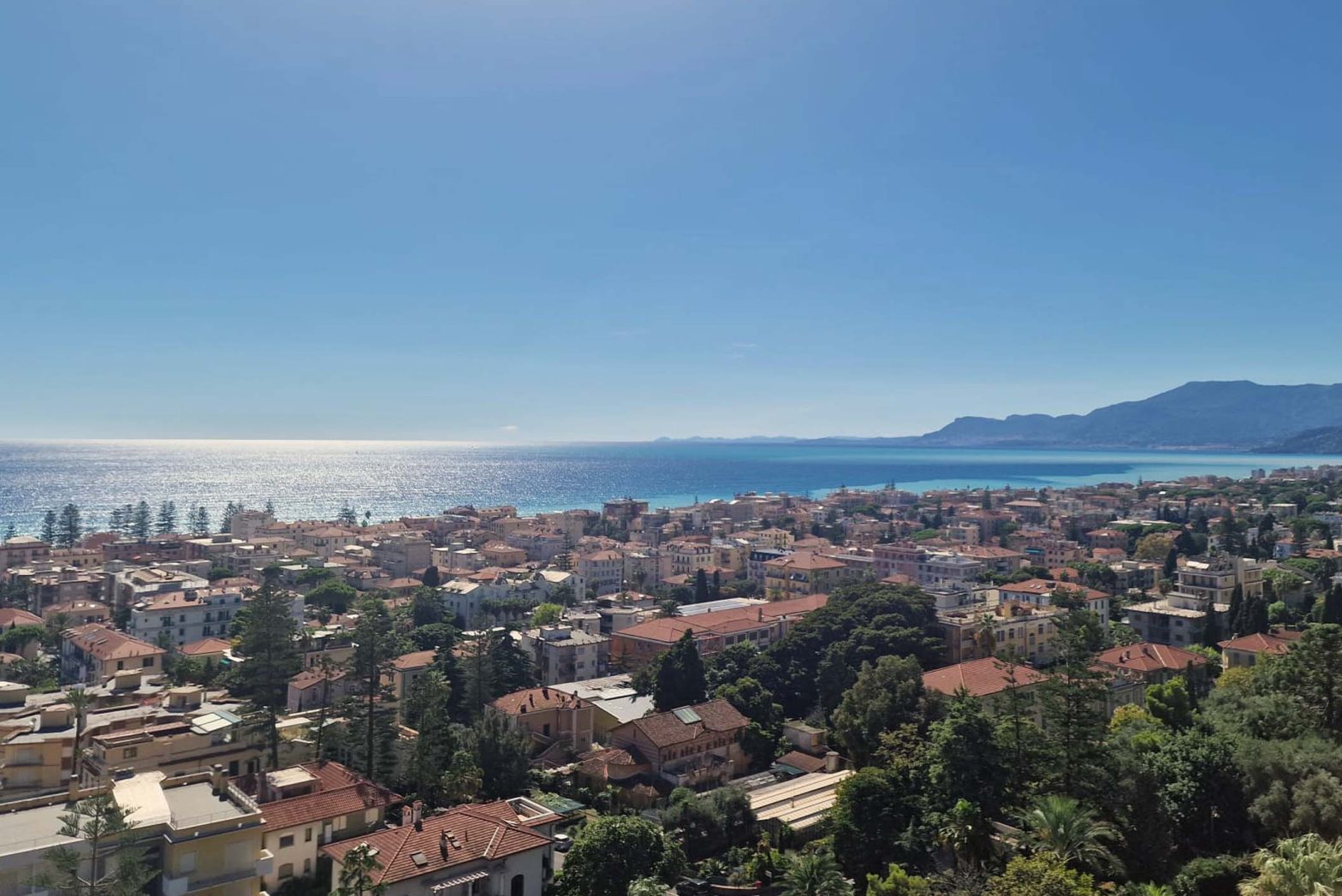
Mortgages for buying a home: the complete guide to making an informed choice on the Riviera.
In the Riviera dei Fiori region, between Bordighera, Ospedaletti and Sanremo, buying a property is not just a decision about where to live, but often also an investment linked to quality of life and the development of the local area. In this context, understanding mortgages becomes even more crucial.
Buying a home is one of those steps where the emotional and rational choices inevitably collide. On one hand, there is the desire to find the right place to live, invest in or spend a significant part of one’s time; on the other, there is the need to understand whether that purchase is truly sustainable and how to approach it with peace of mind.
This is where the mortgage comes into play; it is not just a banking product, but a tool that can make your property project a reality, provided you understand it properly.
In recent years, the issue has become even more central. Following the period of very low interest rates, the credit market has undergone a significant change, linked above all to the decisions of the European Central Bank.
Anyone considering buying a home today is no longer operating in the same landscape as a few years ago, which is precisely why they need clearer, more organised and more concrete information. Understanding how a mortgage works, knowing what costs it actually entails and being aware of the factors that influence approval means getting off on the right foot and approaching negotiations with greater clarity.
What is a mortgage and how does it differ from a loan?
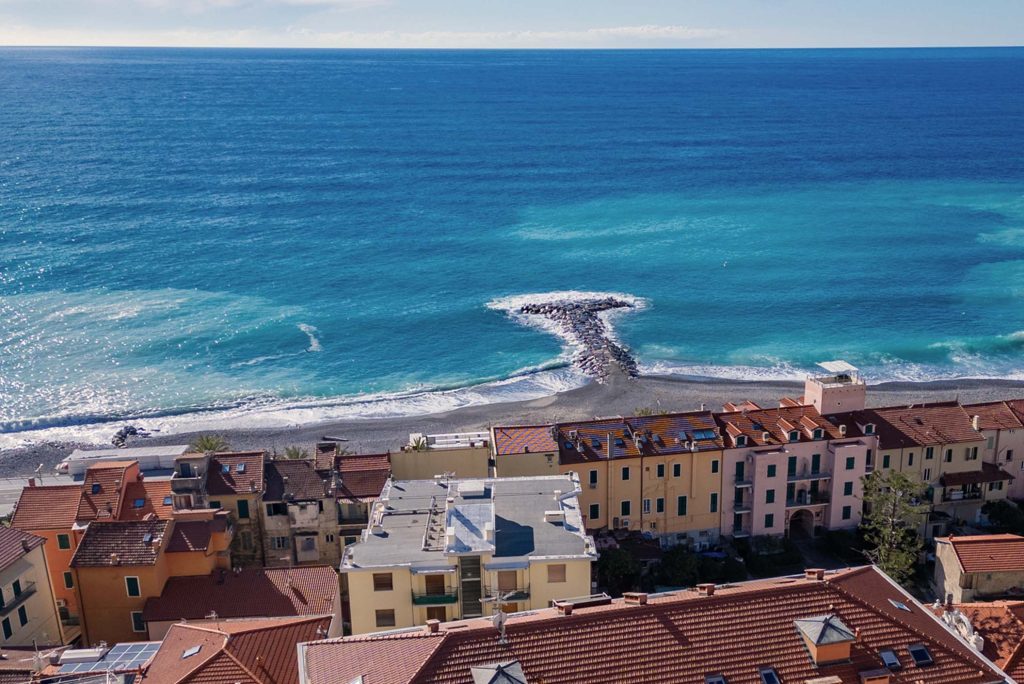
For those considering buying a property on the Riviera dei Fiori, this arrangement takes on even greater practical significance: a mortgage becomes the means by which you can access high-quality properties in highly sought-after locations, without tying up your cash.
A mortgage is a medium- or long-term loan granted by a bank for the purpose of purchasing a property.
In very simple terms, the bank provides part of the money needed to buy the house and the customer repays that sum over time, according to an agreed repayment plan, through regular instalments. This is the essential starting point for understanding the whole process.
Furthermore: a mortgage serves to spread the cost of a purchase over time, which, in most cases, would not be sustainable as a single lump sum.
The difference compared to a personal loan is substantial. A personal loan is not usually linked to the purchase of a property, but is intended to finance different needs, such as buying a car, personal or family expenses, or a small renovation, etc. A mortgage, on the other hand, is taken out for a specific purpose, such as buying a home and/or renovation, and is secured by the property itself through a mortgage. This security makes the transaction more structured, longer-term and generally characterised by different financial terms compared to an ordinary loan.
There is also another point worth clarifying. When we say that the bank ‘advances’ the money, this does not mean that the bank is automatically covering the full cost of the purchase.
Rather, it means that the bank enters into the transaction as a lender, assuming a risk that it carefully assesses on the basis of the applicant’s income, the value of the property and the applicant’s overall financial standing. The mortgage, therefore, is not simply a ‘yes’ or ‘no’ from the bank: it is the result of a thorough and precise financial assessment. To understand this better, let’s imagine a house worth €300,000. In most cases, the bank will assess a loan amount most likely falling between 70% and 80%, with variations depending on various factors such as the source of income (domestic/foreign, employed/self-employed, etc.), tax residence, savings capacity, household composition, etc.
This means that the mortgage could cover, for example, €240,000, whilst the remaining amount must be covered by the buyer. In this sense, the mortgage makes the purchase possible, but does not completely replace the buyer’s initial financial commitment.

How do mortgage repayments work?
The instalment is the most tangible and immediate aspect of the commitment you undertake when taking out a mortgage.
Every month, or at whatever frequency is specified in the contract, the customer will be debited an instalment from a current account, which must hold the sum required to cover the payment. This instalment consists of a ‘principal portion’ and an ‘interest portion’, i.e. the part intended to gradually repay the capital received and the part intended to cover the cost of the loan. The instalment, therefore, is not a single, indistinct lump sum, but is made up of different parts whose relative weight changes over time.
On the one hand, there is the principal portion, i.e. the part of the instalment that actually reduces the debt. On the other hand, there is the interest portion, which represents the cost of the money lent by the bank. In the early years of the mortgage, the interest component is normally higher, whilst the portion of principal repaid is smaller (the so-called French amortisation schedule). Over time, this ratio changes and the principal portion becomes progressively more significant.
It is a mechanism that may seem technical, but in reality has a very tangible impact: it explains why, especially at the start, a significant portion of what you pay serves more to cover the cost of the loan than to reduce the outstanding debt.
This dynamic is important for another reason too. When assessing a mortgage, one should not focus solely on the repayment amount itself, but ask oneself how sustainable that repayment is over time and how it fits into one’s overall budget. A repayment that seems acceptable today may become a burden tomorrow if it has been calculated too close to the limit of one’s disposable income.
For this reason, a mortgage should not be viewed merely as a financial formula, but as a commitment that must remain compatible with real life.

Interest rates: what they are and why they matter so much.
The interest rate is the factor that determines the cost of a mortgage. In practical terms, it is the price you pay the bank for receiving that loan. When it comes to mortgages, many people instinctively focus on the monthly repayment, but the repayment is merely a consequence.
Underlying this are the loan amount, the term and the interest rate, which affect the monthly payment and, above all, the total cost of the loan over the years.
Understanding the interest rate is crucial because two mortgages of the same amount and duration can have very different costs depending on the rate applied. And this is precisely why it is not enough to hear talk of ‘falling rates’ or ‘rising rates’ in general terms. You need to understand that every change can have a tangible effect on the amount you will pay month after month.
In recent years, this issue has become even more apparent. The ECB raised rates in 2022 and 2023 to combat inflation, and this has affected the cost of borrowing.
During 2025, however, the situation has stabilised: the ECB’s official rates were gradually reduced to 2.15% for main refinancing operations from 11 June 2025, whilst the Bank of Italy noted that the cost of new mortgages for households purchasing homes remained around 3.3% in the latter part of 2025.
These figures are not intended to provide definitive predictions, but they do help to illustrate that the market is currently in a different phase compared to the peaks of the previous two years.
In other words, the interest rate is not a technical detail to be overlooked. It is one of the factors that most significantly affects the peace of mind of those buying a home, as it directly influences the financial viability of the project in the medium and long term.
Types of mortgage: fixed-rate, variable-rate and hybrid mortgages.
In practice, those buying property in areas such as the Riviera dei Fiori often tend to favour options that offer stability, particularly when the purchase also serves as an investment or a second home.
When considering the different types of mortgage, the first distinction to understand is that between fixed-rate and variable-rate mortgages. A fixed-rate mortgage is the simplest to understand: the rate agreed at the outset remains unchanged for the entire duration of the loan and, consequently, the monthly repayment also remains stable.
This aspect is hugely valuable for those who prioritise stability. Knowing that the monthly repayment will not change helps you plan your outgoings more effectively and reduces uncertainty.
A variable-rate mortgage works differently. The rate does not remain constant but changes over time in line with the performance of the relevant reference indices.
This has a consequence that is very easy to understand: the monthly repayment may decrease, but it may also increase. For some borrowers, this can represent an opportunity, particularly when the market is in a favourable phase or when they have sufficient financial capacity to absorb any fluctuations. For others, however, it can become a choice that is too exposed to uncertainty.
There is also a third option, less frequently mentioned but nonetheless relevant, which is the hybrid mortgage. In this case, the contract provides for the possibility of switching, under certain conditions or at specific times, from a fixed rate to a variable rate or from a variable rate to a fixed rate.
This is not a ‘magic’ formula, but a solution that offers a degree of flexibility and may be of interest to those who do not wish to lock in their choice entirely from the outset. Naturally, precisely because it is a more complex arrangement, it requires even greater care when reading the terms and conditions.
The difference between these three options should not be viewed in abstract terms. There is no single ‘best’ mortgage for everyone. Rather, there is a formula that is more consistent with one’s financial profile, the current market conditions and the level of peace of mind that each person wishes to maintain over time.
Which should you choose today: a fixed-rate or variable-rate mortgage?
This is one of the most frequently asked questions and, at the same time, one that should not be answered with a ready-made formula.
Generally speaking, many households today view a fixed-rate mortgage as the more prudent choice, as it allows them to lock in certain terms at a time which, whilst more stable than the recent past, cannot be considered entirely free of variables.
Those seeking security and wishing to set a household budget without surprises tend to regard it as a more reassuring solution.
A variable-rate mortgage, on the other hand, may be considered by those with a greater ability to absorb fluctuations in their monthly repayments and a more dynamic view of their relationship with the market. It is not necessarily the wrong choice, but it requires awareness. The potential benefit exists, but it is never separate from the risk. The same applies to a mixed-rate mortgage, which may be of interest precisely to those who do not wish to commit to a rigid path straight away, but wish to retain some flexibility over time.
In practice, the right choice stems from a balance between three factors: the market, the borrower’s income and their tolerance for uncertainty.
The point is not to chase the option that appears most favourable on paper, but to identify the one that remains most sustainable over the entire term of the mortgage.

How do I apply for a mortgage?
At this stage, it may also be useful to take a closer look at the buying process as a whole. A more comprehensive overview is available in our up-to-date guide to buying a home on the Riviera dei Fiori, where we break down all the key steps.
Returning to the main topic, applying for a mortgage means, first and foremost, presenting yourself to the bank with a profile that is as clear and transparent as possible. It is not simply a matter of filling in an application, but of initiating an assessment process in which the bank must determine whether the applicant is capable of meeting the financial commitment over time and whether the property on which the mortgage will be registered represents adequate security.
Usually, it all begins with a preliminary, often informal, phase in which the general situation is analysed: income, employment contract, any other outstanding loans, funds available for a deposit, and the price range of the property you intend to purchase.
This stage is crucial because it helps to define the realistic scope of the transaction right from the start. Proceeding without this clarity often leads to wasted time or entering into negotiations that cannot subsequently be concluded.
The next step is the actual application. At this stage, the bank reviews the applicant’s personal and income documentation, checks that the transaction is sound, and, once the property has been identified, carries out a technical valuation through an expert survey.
Securing a mortgage, therefore, is not an instant process, but a journey that requires preparation, organisation and a clear understanding of one’s actual financial capabilities.

How much can you borrow with a mortgage?
In the Riviera dei Fiori property market, where the quality of the property influences the average price, this assessment becomes even more important for setting the search parameters correctly from the outset.
One of the most natural questions for anyone approaching this topic is to understand how much the bank is willing to lend. Generally speaking, banks often lend between 70% and 80% of the property’s value to a person who is a tax resident in Italy, although there are exceptions and specific schemes.
Beyond these theoretical thresholds, however, the decisive factor is another: the bank does not base its decision solely on the price of the house, but on the overall affordability of the mortgage repayment relative to the applicant’s income. This means that two people interested in the same property could receive different responses simply because their earning capacity or their overall financial situation differs.
In other words, the right question is not just ‘How much can I borrow?’, but also ‘How much can I actually afford without compromising my financial stability over time?’. It is precisely here that a clear-headed assessment makes the difference between a well-managed purchase and a commitment taken on too lightly.
How much of a deposit do you actually need for a mortgage?
The idea that a mortgage alone covers the entire purchase price is one of the most widespread beliefs and, at the same time, one of the most misleading. In practice, an initial deposit is almost always required. If the bank finances 70–80% of the property’s value, this means the buyer must have at least the remaining 20–30% available, plus all the associated costs linked to the transaction.
This point is crucial because people often focus on the price of the house and the future mortgage payments, but underestimate the cash required to actually complete the purchase. Returning to the example of a €300,000 property, if the mortgage covers €240,000, the buyer will need to contribute at least €60,000 from their own funds, before even considering the notary, taxes, application fees, valuation and other costs. The down payment, therefore, is not a minor detail. It is one of the factors that most significantly influence the actual possibility of making a purchase and must be assessed realistically, without focusing solely on the listed price of the property.
What are the requirements for obtaining a mortgage?
When it comes to eligibility criteria, many people immediately think of the type of employment contract, and rightly so, because job stability matters. But to reduce it all to that would be simplistic. The bank looks at a range of factors which, taken together, help to determine whether the applicant is creditworthy and whether they can sustain the repayment of the loan over time.
Income is naturally key, but it is not enough! It must be consistent with the amount requested. The bank then analyses the applicant’s financial history – that is, how they have managed any other financial commitments in the past – as well as any negative credit reports or particularly challenging debt situations.
In essence, the bank does not just look at how much you earn, but also at how that income translates into a concrete ability to repay.
This assessment also takes into account the applicant’s overall personal circumstances. The existence of other loans, the composition of the household, the level of existing expenditure and the availability of savings are all factors that can influence the final decision. For this reason, preparing to apply for a mortgage means not only gathering documents, but also taking an honest look at one’s financial situation as a whole.
Is it possible to take out a fixed-term mortgage?
It is possible to secure a mortgage with a fixed-term contract, but the process is more complex than it is for those on a permanent contract. This does not mean the option is completely ruled out, but rather that the bank tends to assess the applicant’s income continuity and future stability with greater caution.
In such cases, certain factors that can strengthen the application become even more important. For example, a consistent employment history, frequent contract renewals, a good ability to save, or the inclusion of a second co-borrower with a more solid financial profile can make the application more credible. In some situations, having a guarantor may also be helpful, but one should not assume that this alone is always sufficient.
The key point is this: a fixed-term contract does not automatically rule out access to a mortgage, but requires a broader assessment of the financial situation.
It is precisely in these cases that a thorough preliminary assessment becomes even more important, as it allows one to understand from the outset whether the application has a solid foundation.

How much does a mortgage really cost: the actual costs and hidden charges.
One of the most common mistakes when considering buying a home is to focus solely on the monthly repayment. This is understandable, as the repayment is the most obvious figure, but it is by no means the only cost to take into account. In reality, a mortgage is part of a wider process that involves a range of expenses which are often underestimated or only partially understood.
Various market analyses indicate that the total ancillary costs associated with the purchase can have a significant impact on the overall budget, in many cases amounting to around 7–10% of the property’s value. This figure is not a fixed rule applicable to every situation, but it helps to understand one essential point: buying a home costs more than just the purchase price and more than just the future mortgage repayment. Among the items to consider are notary fees, taxes, bank charges, the cost of the valuation and any insurance cover. These are different types of expense, with different rationales, but they all contribute to the actual cost of the transaction. Ignoring them or addressing them too late means running the risk of reaching the final stage of the purchase with incomplete planning.

Overview of the matter of the notary
The solicitor is involved in the final stage of the purchase and plays a central role, as they formalise the deed of sale and, where applicable, the mortgage agreement. They are an essential, rather than an optional, figure, and their fees must be taken into account from the outset.
The amount may vary depending on the value of the property, the complexity of the deed and other factors, so there is no single figure that applies in every case. What is really important to understand is that the notary’s fees do not simply cover a ‘final signature’, but a series of checks and formalities that give the transaction legal validity.
Alongside the notary, there are also taxes. Here, the situation varies depending on the type of property and the type of purchase.
The Italian Revenue Agency (Agenzia delle Entrate) provides specific tax relief for a main residency home (prima casa — first-home): when the purchase is made from a private individual meeting the relevant criteria, the registration tax is 2% instead of 9%, whilst mortgage and cadastral taxes are fixed at €50 each. In the absence of first-home tax relief, the tax burden changes significantly. This means that the difference between a first and a second home is not merely a matter of concept, but has a real and immediate financial impact.
It is essential to fully understand this point, because many people view the mortgage as the only major cost involved, whereas in reality taxes and notary fees represent a tangible and often significant component of the initial budget required to buy a home.
Application fees, expert reports and insurance.
In addition to the property price, the notary’s fees and taxes, there are also costs directly linked to the mortgage, such as the bank’s processing fees. Application fees are those charged by the bank to review the application, check the documentation and assess the applicant’s creditworthiness. Essentially, this is the cost of processing the application.
Then there is the evaluation, which the bank uses to establish the value of the property and verify that it is consistent with the loan requested. This item is also very important, because the bank decides how much to lend partly on the basis of that technical valuation.
Finally, the issue of insurance must be considered. The law requires the property to be insured against fire and explosion, so that if the house – the collateral – were to suffer significant damage as a result of such events, the bank and the borrower would be compensated by the insurance, thereby reducing the debt. However, this is also a good opportunity to consider cover relating to the individual and their ability to repay, such as death, disability and incapacity to work.
The point here is not simply to be aware that these exist, but to fully understand which ones are appropriate and what impact they have on the overall cost of the operation. In this regard too, a cursory reading risks leading one to underestimate items that actually have a significant impact.
Mortgage application: the stages and timing.
Throughout this process, the support of a locally based agency such as Domus can make all the difference, facilitating communication between the buyer, the bank and all parties involved. But let’s take a look at the steps and timelines involved in applying for a mortgage.
It all begins with gathering the necessary documents and submitting a formal application to the bank. If the property has already been identified, however, a technical inspection of the property via a valuation report also comes into play. At the same time, the bank analyses the applicant’s profile, income, any other financial commitments and the overall viability of the transaction.
If all these elements are found to be compatible, the bank reaches a decision, i.e. the decision to grant the mortgage. The final step is then the signing of the mortgage agreement, which takes place at the same time as the sale and purchase agreement. Seen from the outside, it may seem like a straightforward process, but in practice, each stage requires precision, technical timelines and good organisation.
As for the timeframes, however, these are not the same for everyone, but on average they often fall within a range of four to eight weeks. In some cases, the process can be completed sooner; in others, it may take longer. It depends on the completeness of the documentation, the speed with which the checks are carried out, the complexity of the applicant’s profile and, of course, the lending institution involved.
This is important because it directly affects the management of the property transaction. Anyone buying a home should proceed with the understanding that a mortgage involves a genuine processing time and that initial preparation can make a real difference in ensuring the process runs more smoothly.
Which documents are required?
The documentation required for a mortgage may vary slightly from bank to bank, but generally speaking it falls into three main categories: personal documents, income documents and property-related documents. The first category typically includes identity documents and a tax registration number. The second category includes, depending on the circumstances, payslips, tax returns, income certificates, bank statements and any other documentation useful for demonstrating the applicant’s financial stability.
The third area concerns the property and includes the technical and legal documentation required by the bank to assess the asset that will serve as security for the loan. This is a part that is often perceived as less relevant to the buyer, but which in reality has a very tangible impact on the smooth running of the transaction. Having the documents organised and available from the outset is not merely a matter of formal precision. It means making the file easier to review, reducing unnecessary steps and increasing the likelihood that the process will proceed in a more orderly and faster manner.

With Domus, you’ll always have a clearer picture of your mortgage.
In today’s property market, particularly in areas such as the Riviera dei Fiori, a mortgage should not be viewed merely as a means of ‘buying a home’, but as part of a broader decision. In many cases, people are buying their first home; in others, a second home; and in others still, a property to form part of a more complex wealth or family strategy.
This changes the way one should approach financing.
Choosing a mortgage does not simply mean looking for the lowest rate or the instalment that appears most convenient. It means understanding which option truly suits your plans, what level of commitment you can comfortably sustain, and what the actual costs of the purchase entail as a whole.
This is precisely where expert advice makes all the difference. Domus supports its clients not only in finding the most suitable property, but also in navigating the economic and financial aspects that affect the purchase.
Because buying a home, especially in an area such as the Riviera dei Fiori, is not merely a matter of personal taste or opportunity: it is a significant decision that requires a thorough understanding, clarity, foresight and practical support at every stage of the process.
Contact us and let this experience be managed by experts, ready to support you through this delicate phase too!