
Why visit the Riviera dei Fiori in autumn?
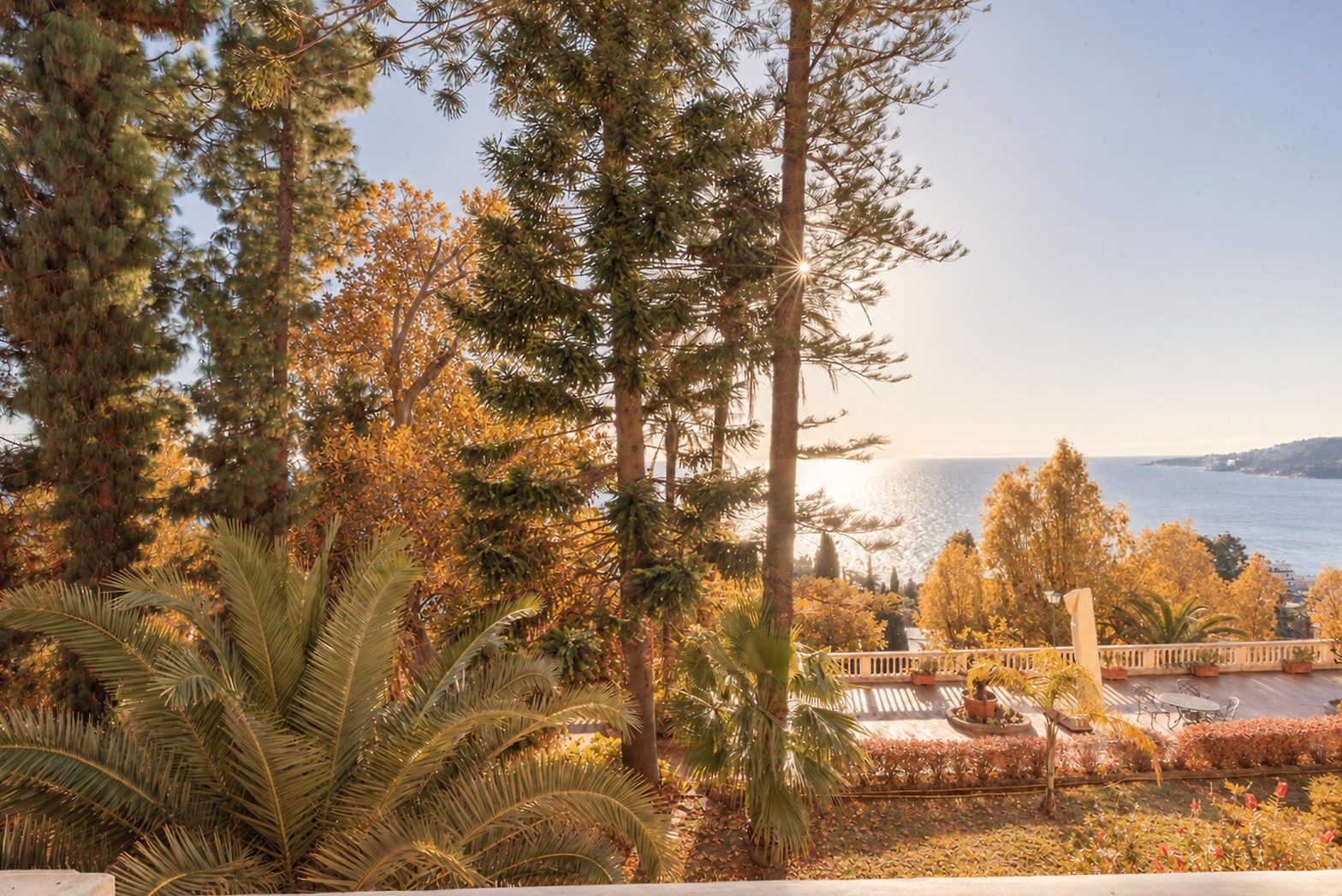
When one thinks of the Riviera dei Fiori, one’s thoughts almost inevitably turn to summer. To the sea, to bright, sunny days, to strolls along the seafront and to the Mediterranean vegetation that lines the coast from Bordighera to Sanremo. Yet it is precisely when the summer season draws to a close that this region reveals one of its most fascinating sides.
Autumn changes the rhythm of the Riviera without dampening its spirit. The beaches become quieter, the temperatures encourage you to spend more time outdoors, and the light takes on softer, more colourful hues, especially in the hours leading up to sunset. You only need to venture a few kilometres inland for the landscape to change completely: palm trees and Mediterranean scrub give way to woods, chestnut groves, olive groves, vineyards and small inland villages.
It is precisely this proximity between different environments that makes autumn on the Riviera dei Fiori so special. In the course of a single day, you can walk amongst the colours of the autumn foliage, have lunch in a village, return to the coast for a stroll by the sea and wait for the sunset. The Liguria Region, in fact, highlights autumn as a season particularly suited to exploring the area at a more leisurely pace, taking in coastal and mountain trails, woods, parks, seasonal flavours and villages.
For those who only know the Riviera during the busiest months, returning between September and November is almost like rediscovering it. And for those thinking of spending longer periods there during the year or of buying a second home, it may also be the right time to realise just how much this area has to offer, well beyond the summer months.
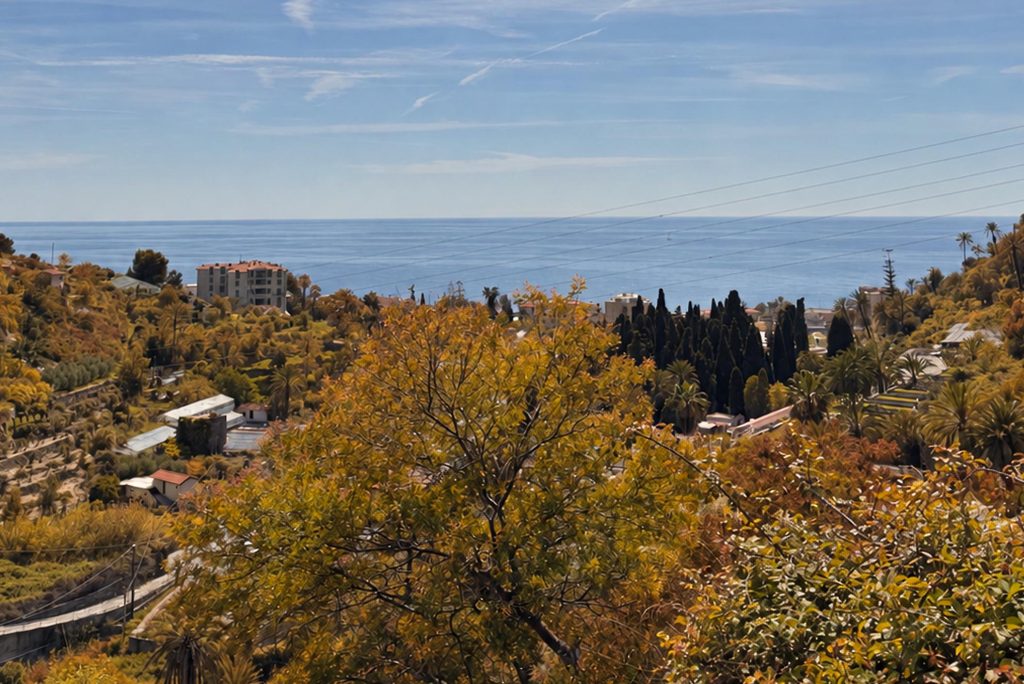
An autumn to be enjoyed in the great outdoors, between the sea and the mountains.
One of the great advantages of the Riviera dei Fiori is the chance to continue enjoying the outdoors even when summer is well and truly over. The climate of western Liguria allows for a wide range of outdoor activities throughout the year, and autumn – with temperatures generally milder than in the summer months – becomes a particularly pleasant season for those who love to be active.
Behind Sanremo, Bordighera and Ospedaletti lies a hinterland where the terrain changes rapidly in altitude. In just a few kilometres, you go from the Mediterranean to paths nestled in the woods, vantage points and hills from which the sea often remains visible. The area offers routes for trekking, running, mountain biking, downhill cycling and horse riding, confirming just how well-suited the Riviera is to sport well beyond the summer months alone.
It is here that autumn truly transforms the landscape. The colours of the vegetation grow warmer, the days invite you to explore the trails without the summer heat, and a simple walk can become a completely different way of experiencing the Riviera. The mountains are not a world apart from the coast: they are part of the same landscape.
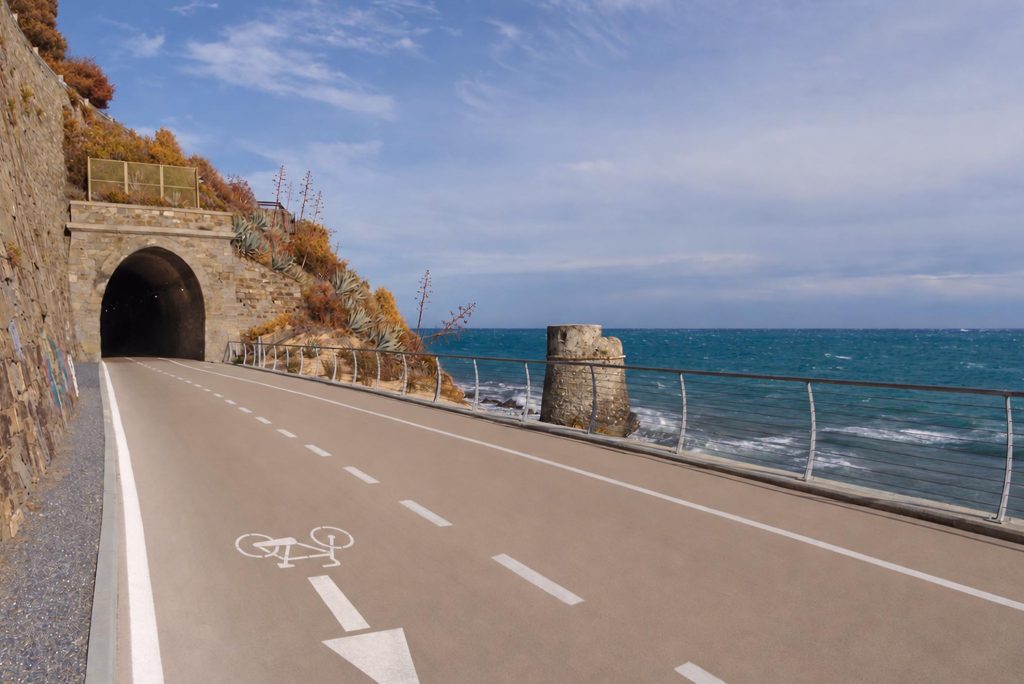
Those who prefer cycling can alternate between the more challenging routes inland and one of the iconic cycle routes of western Liguria. With the completion of the connecting sections in 2026, the Riviera dei Fiori Cycle Route can now be cycled without interruption for around 45 kilometres, from Ospedaletti to Andora, running mainly along the coast and largely following the route of a disused railway line. It is one of the longest coastal cycle routes in Europe and a superb way to explore the Riviera, following the Mediterranean coastline through tunnels, small villages, beaches and panoramic views.
Autumn thus becomes the season to either slow down or, conversely, pick up the pace: a stroll through the woods, a day out on a mountain bike, a run with sea views or a cycle ride along dozens of kilometres of coastline can all coexist just as naturally.
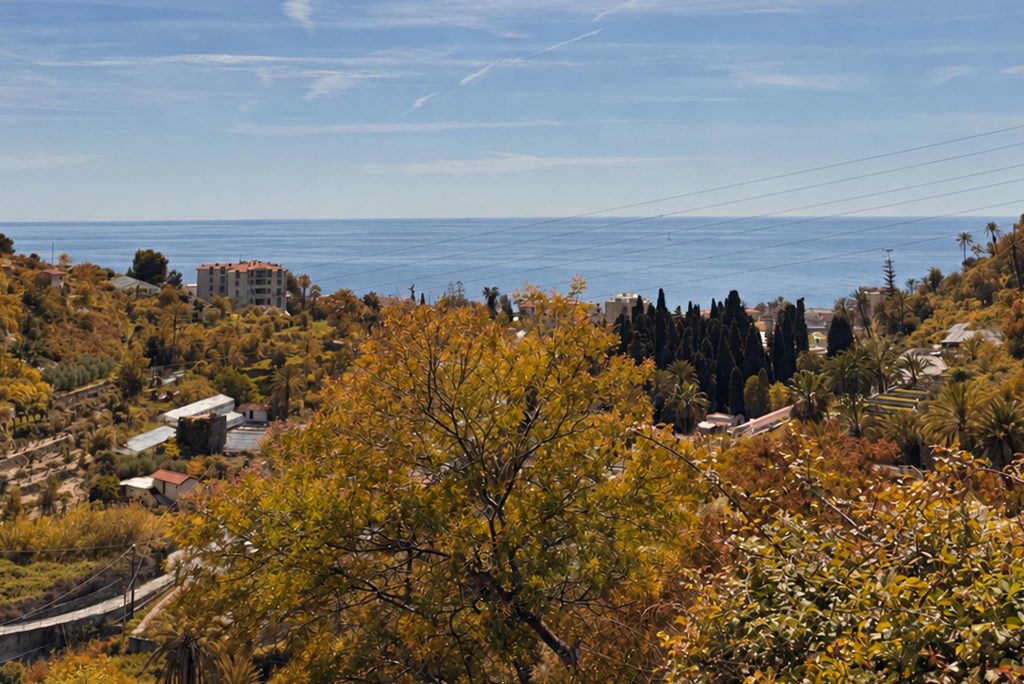
The autumn colours of the Riviera dei Fiori: you only need to leave the coast to experience a change of scenery.
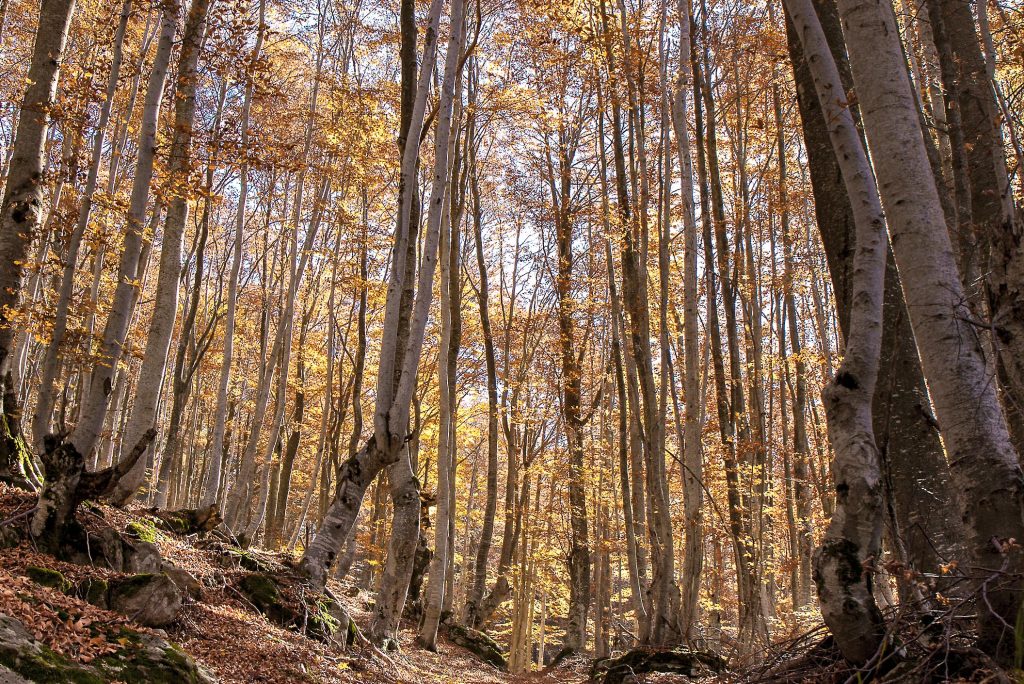
The very name ‘Riviera dei Fiori’ might conjure up images of an evergreen, Mediterranean landscape. And this is partly true: along the coast, palm trees, citrus trees, pines and subtropical vegetation continue to characterise the landscape even during the cooler months. But you only need to venture into the inland valleys to encounter a decidedly more alpine autumn.
Chestnut trees, oaks, olive groves and other deciduous trees gradually transform the landscape, creating that contrast between the blue of the Mediterranean and the colours of the woodland which is one of the distinctive features of western Liguria.
Walks then become an opportunity to observe the landscape as it changes its appearance. You can choose a short route, stop off in a village, or spend a whole day in the Ligurian Alps. You don’t necessarily need to be an experienced hiker: there are routes of very different lengths and levels of difficulty, some of which pass through rural areas and along ancient paths used for centuries by the valley dwellers.
And it is precisely along these routes that autumn reveals another side to the hinterland: that of its villages. Many have preserved their ancient layout over time, characterised by narrow alleyways, arches, stone houses, small squares and views that seem to belong to a different rhythm. Stopping to visit them means adding to the beauty of the autumn foliage the charm of places that still retain a strong sense of identity, where landscape and history continue to coexist naturally.
The value of the experience, therefore, lies not only in the colours of the season. It is the interplay between woods, villages and the Mediterranean that makes this part of Liguria so special. In just a few hours, you can climb to higher ground, breathe in the fresh mountain air, pass through a village that retains the charm of days gone by, and shortly afterwards find the sea stretching out before you.
Bordighera in autumn: following in the footsteps of the landscapes that captivated Claude Monet.
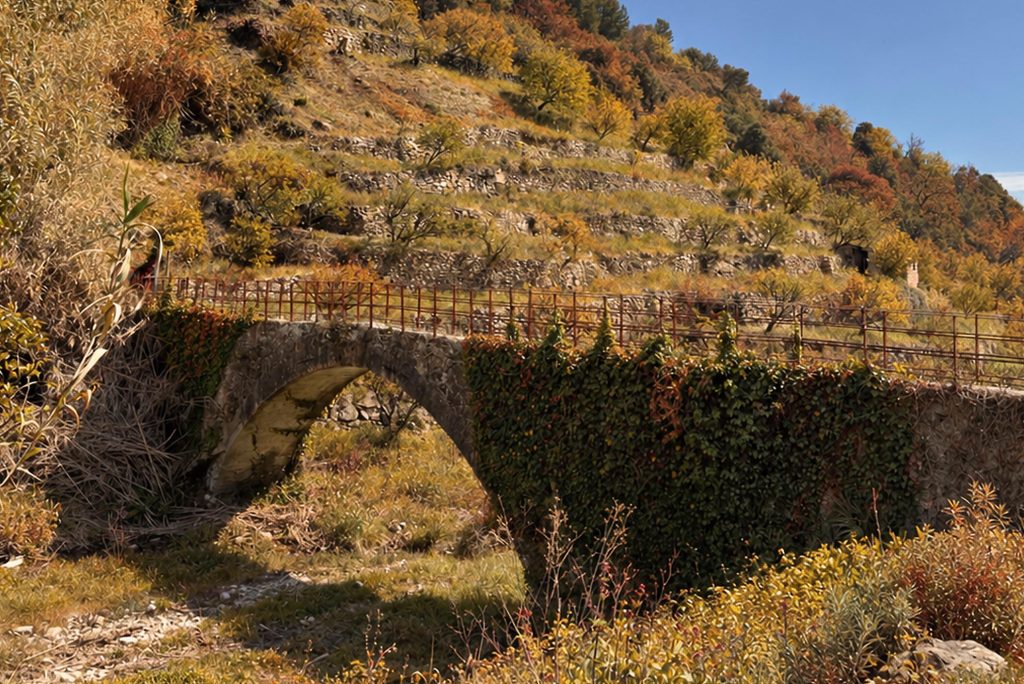
Among the most fascinating walks in the area, the Sentiero del Beodo in Bordighera deserves a special mention. It is not merely a walk through nature, but a route where landscape, history and art intertwine.
The path follows the route of the ancient aqueduct that once carried water to Bordighera, crossing the Sasso valley and the agricultural landscape behind the town. It stretches for around three kilometres, passing through olive groves, pergolas and dry-stone walls, with sweeping views towards Bordighera and the sea. It is a quintessentially Ligurian landscape, characterised by terraces and Mediterranean vegetation, where traces of the ancient water system are still visible.
What makes it even more special is its connection to Claude Monet. The artist arrived in Bordighera in 1884 and was deeply struck by the light and vegetation of the area. During the 79 days he spent here, he produced 38 paintings, exploring the Via Romana, the Vallone del Sasso, the gardens and various spots in the hinterland.
Today, Bordighera has also created a trail called ‘In the Footsteps of Monet’, designed to guide visitors to the places that inspired the painter.
Exploring these landscapes in autumn allows you to see them from yet another perspective. The light becomes more oblique, the midday hours are more pleasant for walking, and the silence lends the landscape a more intimate feel. It is not hard to understand why artists and travellers from all over Europe have been captivated, over the centuries, by this corner of the Riviera.
Mountain biking, horse riding, golf and outdoor sports.
The Riviera dei Fiori in autumn is particularly appealing to those who consider sport an essential part of their lifestyle.
In the hills above Sanremo, particularly between San Romolo and Monte Bignone, there are trails popular with mountain bikers, enduro riders and downhill enthusiasts. Some of the trails are decidedly technical and require experience, whilst others allow you to explore the area at a more leisurely pace. What they all have in common is the constant connection with the landscape: you ride through woods and hills, knowing that, just a little further down, lies the sea.
Horse riding also finds a particularly picturesque setting on the Riviera and in its hinterland. Alongside facilities dedicated to the sport, such as the Sanremo Equestrian Centre on the Solaro hill, the hinterland is home to various centres and establishments linked to the world of horses, providing an ideal starting point for rides along footpaths, through woods and along mountain trails. On horseback, you discover the area at a different pace, reaching lesser-known views and hidden corners, traversing rural landscapes and areas immersed in nature that reveal a more hidden and authentic side of Liguria.
Not far away is the Golf degli Ulivi in Sanremo, with an 18-hole course nestled in the hills behind the town. What makes it particularly charming is not only the natural setting but also its panoramic location: from various points along the course, the view opens out over Sanremo and the Mediterranean, transforming a day’s sport into an experience deeply connected to the landscape of the Riviera. The mild climate also means you can play for much of the year, making autumn a particularly pleasant season for enthusiasts.
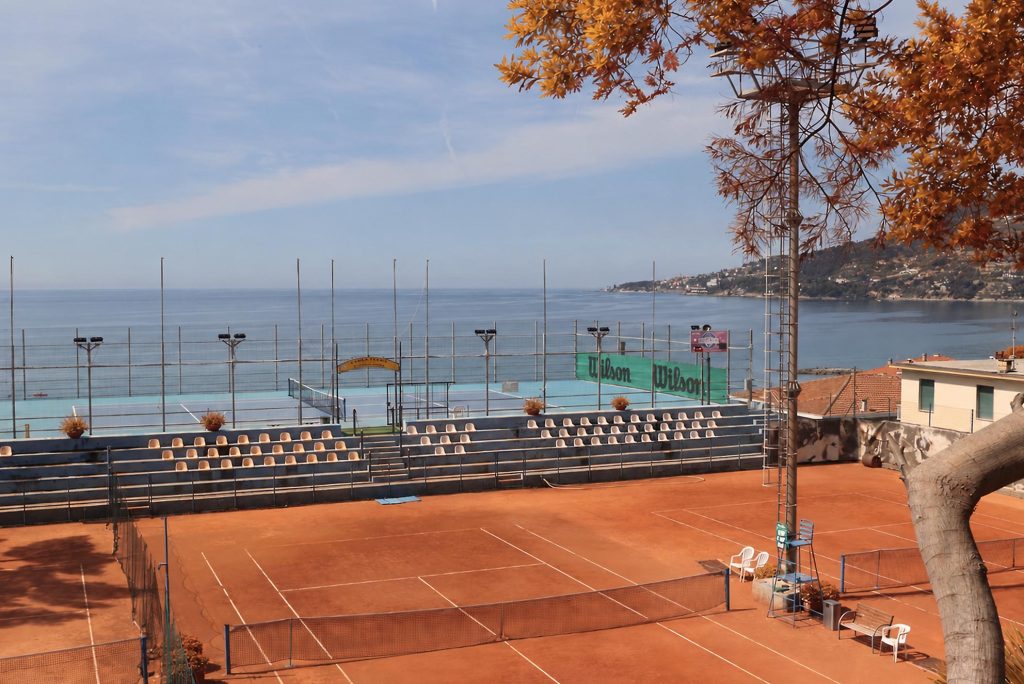
Tennis, running, functional training and outdoor workouts round off a range of activities that make it possible to maintain an active lifestyle without being solely dependent on the warmer months. This is one of those aspects that you often only truly appreciate by staying on the Riviera outside the summer months: here, sport is not just an activity, but one of the most natural ways to connect with the local area.
The sea doesn’t go on holiday.
Visiting the Riviera dei Fiori in autumn doesn’t necessarily mean saying goodbye to the sea until next year.
Walks along the seafront become longer, the terraces overlooking the coast take on a more relaxed atmosphere and, on fine days, the sea remains a place to enjoy actively.
Canoeing and kayaking allow you to view the coast from a completely different perspective, whilst sailing has long been an important part of the maritime culture of western Liguria. This connection is also reflected in one of the region’s best-known events: the Vele d’Epoca di Imperia, an event that attracts prestigious historic yachts and sailing enthusiasts from across the Mediterranean to the capital of Western Liguria. Over the years, this event has become not only a sporting occasion but also a celebration of the deep bond that this part of Liguria maintains with the sea.
Moreover, thanks to the mild climate, sailing is enjoyed even beyond the summer season, as are other seaside activities. Boat trips, courses organised by local operators, canoeing, kayaking and diving are, of course, dependent on the weather and sea conditions, but autumn does not automatically mark the end of the sailing season.
And this is perhaps one of the most surprising aspects of the Riviera: being able to spend the morning on the trails in the hinterland and find yourself back at the harbour, overlooking the Mediterranean, just a few hours later.
Chestnuts, mushrooms and festivals: autumn makes its way into the kitchen too.
To truly understand a region, you often need to sit down at the table. In autumn, on the Riviera dei Fiori and in its valleys, the cuisine follows the rhythm of the season and brings to the fore produce deeply rooted in rural tradition.
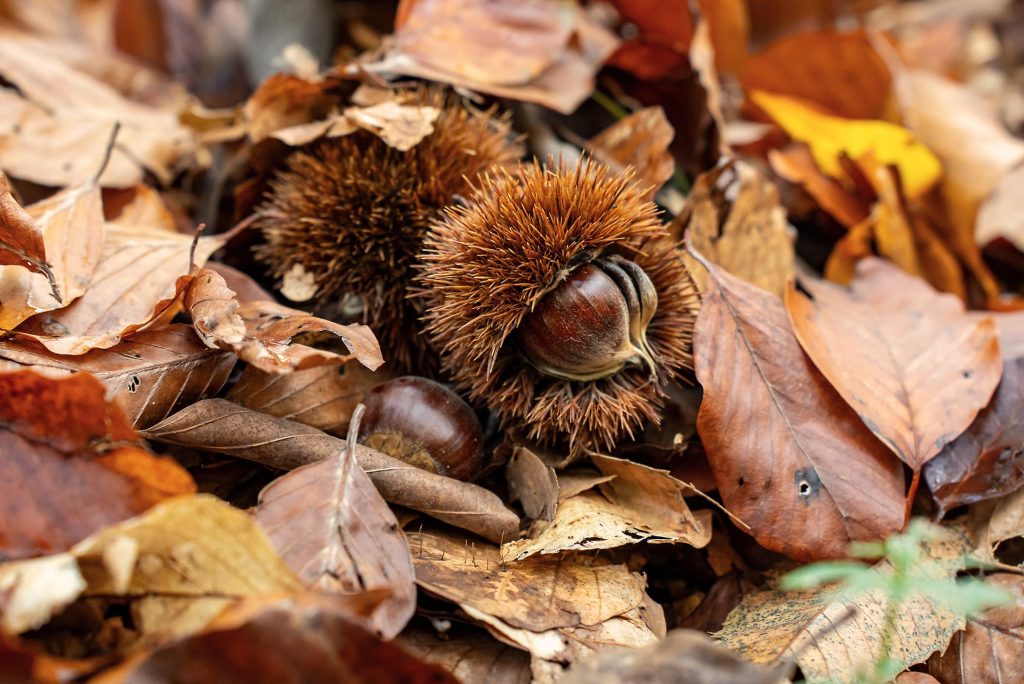
Chestnuts and mushrooms take centre stage in the woods and kitchens of the hinterland. Foraging – where permitted and always in accordance with local regulations – is an activity that has been part of valley life for generations. Festivals and events centred around these produce allow even those arriving from the coast to discover a lesser-known side of Liguria.
The 2026 calendar of the Riviera dei Fiori DMO, for example, includes festivals between September and October dedicated to mushrooms in San Lorenzo al Mare and Triora, to snails in Camporosso, and to chestnuts in Montegrosso Pian Latte.
These are not merely culinary events. These festivals reflect the community spirit of small inland towns, preserve recipes and traditions, and offer a very different pace of life to that of coastal resorts.
An autumn day can therefore begin with a walk in the woods, continue through the narrow streets of a village and end with a seasonal dish. It is a slower way of travelling, but one that brings you closer to the real life of the local area.
New olive oil and the olive harvest: autumn of the Taggiasca.
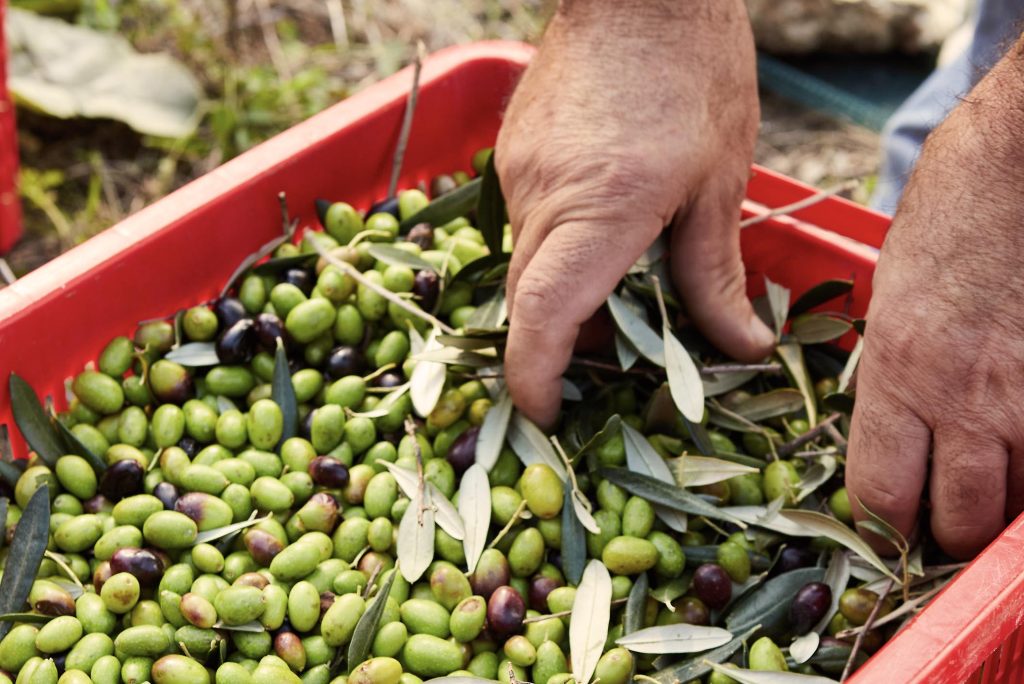
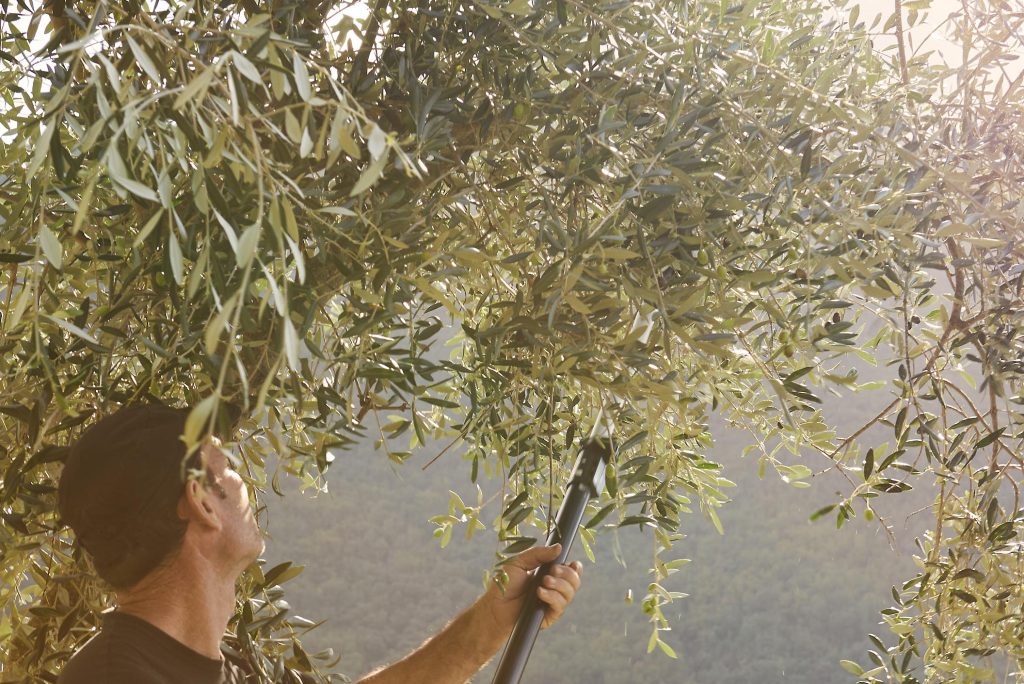
Few images capture the essence of western Liguria quite like the terraced hills covered in olive trees. In autumn, this landscape enters one of the most important phases of the year: the harvest.
The Taggiasca is the variety that symbolises the province of Imperia. Between autumn and winter, the nets used for harvesting begin to appear beneath the trees and the oil mills start up again. It is a transformation that affects more than just agriculture: it visually alters the hills and still marks the calendar of many local families and businesses today.
For those visiting the Riviera at this time of year, the world of olive oil can become a true travel experience. Farms and producers organise visits to olive groves, explanations of cultivation methods and tastings of extra virgin olive oil, enabling visitors to understand differences that often go unnoticed when one merely tastes it at the table. The region’s tourist offering also includes experiences dedicated to visiting Taggiasca olive groves and guided tastings of olive oil and olives.
The new olive oil thus becomes the starting point for discovering a landscape shaped over the centuries: the Ligurian ‘fasce’, the dry-stone walls, the small plots of land and the olive mills all bear witness to a delicate balance between man and the land.
In Imperia, this culture is also celebrated by OliOliva, the annual event dedicated to freshly pressed olive oil and the specialities of western Liguria, featuring tastings, talks and initiatives linked to olive growing.
Wine and the local area: autumn is also a season for wine tasting.
The hinterland of the Riviera dei Fiori is not just a land of olive trees. Its valleys are also home to vineyards that produce some of the most distinctive wines of Liguria.
Rossese di Dolceacqua, Pigato, Vermentino, Moscatello di Taggia and Ormeasco di Pornassio reflect territories that are geographically very close, yet profoundly different in terms of altitude, aspect and soil characteristics.
Visiting a winery or taking part in a wine tasting during the autumn therefore allows you to add another piece to the jigsaw of your knowledge of the Ponente region. Wine becomes an excuse to explore the valleys, wander through the villages, chat with the producers and understand how the agricultural landscape has shaped the local culture.
For those seeking more refined experiences away from mass tourism, it is one of the most interesting ways to spend a day: just a few stops, a leisurely pace, local produce and the chance to return to the coast at sunset.
Transhumance and the oldest Riviera.
Autumn also brings with it traditions that are deeply rooted in the history of the Ligurian Alps.
Among these is transhumance, the seasonal migration whereby flocks and herds leave the high-altitude pastures to return to lower altitudes in preparation for winter. In the Upper Arroscia Valley, in Mendatica, this practice has shaped the lives of local communities for centuries and is still commemorated through events and trails linked to the culture of the mountain pastures.
It is a world that seems a world away from the seaside villas and elegant promenades of Bordighera, Ospedaletti and Sanremo. In reality, it is part of the very same territory.
And it is precisely this contrast that makes the Riviera dei Fiori so special: there is no need to choose between the Mediterranean and the mountains, between high society and small villages, between sailing and hiking trails. Everything coexists within a surprisingly compact area.
From the Riviera to Monte Carlo: even Halloween has its sights set on the Côte d’Azur.
Finally, the geographical location of the Riviera dei Fiori offers another advantage: easy access to the Côte d’Azur and the Principality of Monaco.
In autumn, this proximity further expands the range of leisure activities on offer. Halloween, in particular, is traditionally celebrated in the Principality with family-friendly events and seasonal festivities. For 2026, Monaco’s traditional Foire Attractions has already been confirmed to take place at the harbour from 16 October to 19 November, with an additional opening on 31 October.
This detail clearly illustrates the privileged location of this part of Liguria. Living or staying between Bordighera and Sanremo means being able to alternate between the cosy atmosphere of the Ligurian hinterland and the cultural, commercial and social events of the Principality, without having to travel long distances.
Autumn sunsets: when the Riviera changes colour.
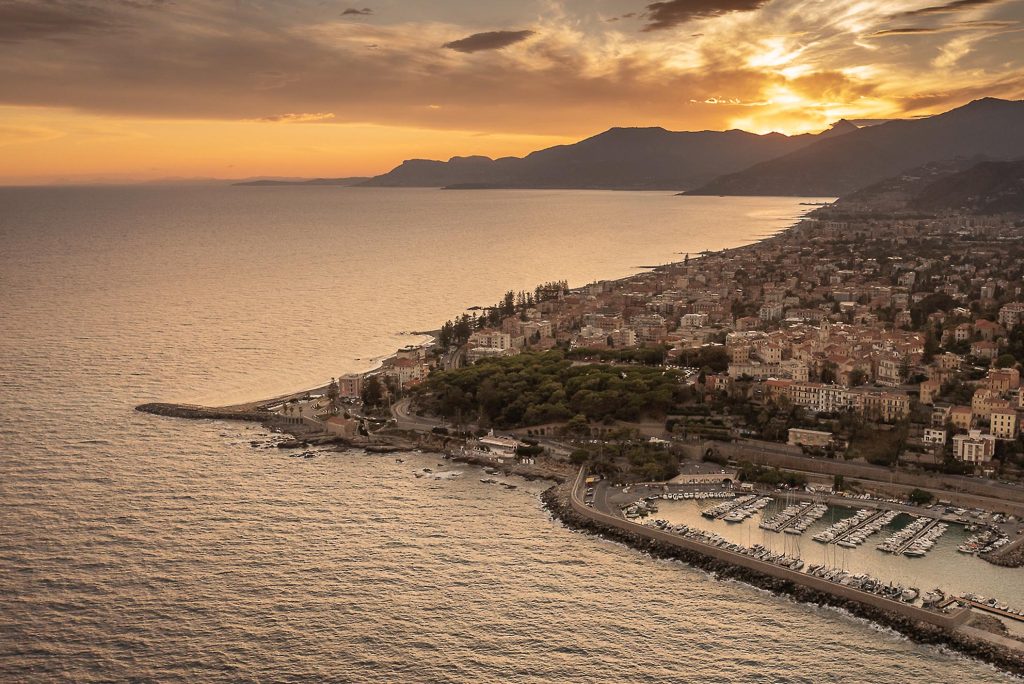
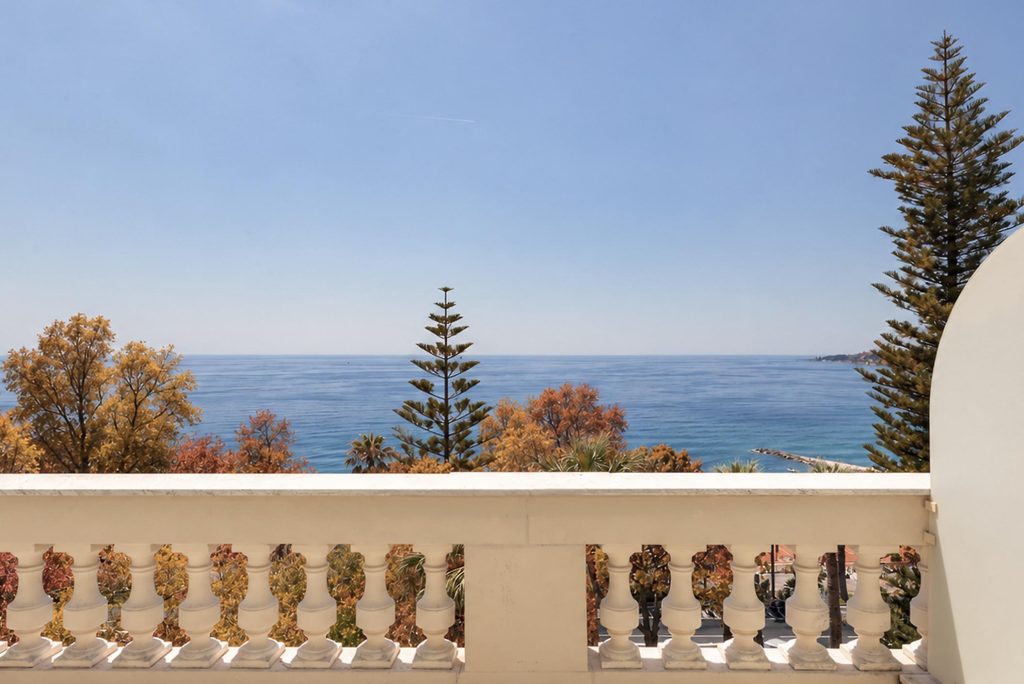
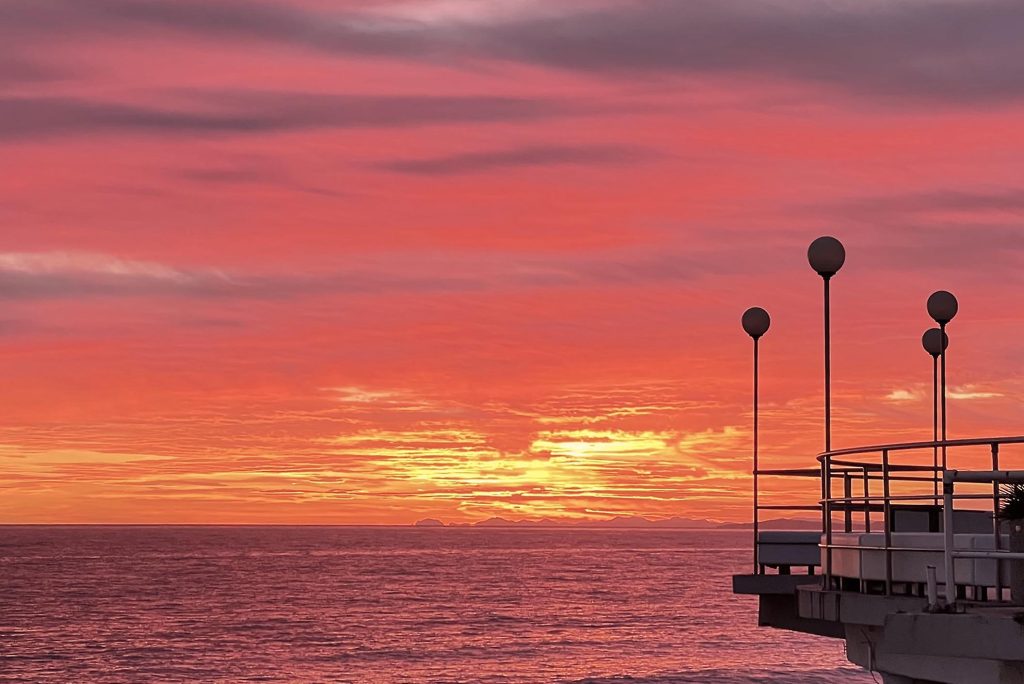
In autumn, the sun sets earlier and sunset once again becomes part of everyday life, not just the end of a long summer’s day. Along the promenades of Bordighera, Ospedaletti and Sanremo, on the terraces of houses overlooking the Mediterranean or along the cycle path, the light grows dimmer and the sky takes on shades of orange, pink and red that constantly transform the landscape.
Bordighera, in particular, boasts a number of prime vantage points from which to witness this spectacle. From the Lungomare Argentina to Capo Sant’Ampelio, right through to the views that open up from the historic centre and the higher parts of the town, the sunset becomes almost a different way of discovering the area. We’ve also featured these spots in our in-depth guide ‘The best places to watch the sunset in Bordighera’, an itinerary combining the sea, nature and vantage points from which to watch the town as the light changes.
The Riviera dei Fiori coastline is all about this too: views that don’t necessarily require a specific destination. Sometimes all you need to do is stop, look out to sea and wait a few minutes.
It is perhaps autumn itself that best explains why so many people choose this area not just for a holiday, but to spend an increasingly significant part of the year here. Because when a sunset like this becomes part of everyday life, it ceases to be merely something to photograph and becomes part of the joy of living here.
Visit the Riviera dei Fiori in autumn to discover what it really means to experience it.
Summer perhaps reveals the best-known side of the Riviera dei Fiori. Autumn, on the other hand, allows you to discover its depth.
It is the season when the region changes pace without losing any of its vitality. The footpaths wind through woods tinged with new colours, the new olive oil arrives at the mills, the inland villages rediscover their traditions, and the temperatures continue to encourage people to spend plenty of time in the open air.
By the sea, you can still enjoy water sports; in the hills, you can cycle, go horse-riding, play golf or simply go for a walk, whilst the coast bathes the days in that Mediterranean light which becomes even softer in autumn.
Visiting Bordighera, Ospedaletti, Sanremo and their hinterland between September and November therefore means looking beyond the image of the classic summer destination. It means discovering a region capable of offering diverse experiences throughout the year and, above all, beginning to view it not merely through the eyes of a holidaymaker, but through those of someone who might choose to live there for longer.
It is often during the off-season, in fact, that one truly appreciates the value of a second home. When it is no longer just a summer holiday spot, but becomes the starting point for a stroll amongst the olive groves, a weekend by the sea, a day in the hinterland or simply a few days to slow down and rediscover your own rhythm.
For those who are beginning to consider this possibility, we have explored all the key aspects you need to know in our « An up-to-date guide to buying a home on the Riviera dei Fiori!« , designed for anyone wishing to make this decision with greater awareness.
Because finding a home here isn’t just about choosing floor area, aspect or sea views. It’s about understanding which part of the Riviera could truly become your home.
For over fifty years, Domus has known this area, its towns and the various possibilities it offers to those who wish to make it their home. If your autumn on the Riviera dei Fiori has made you dream of something more than just a holiday, please get in touch: we’d be delighted to hear what you’re looking for and help you discover the home that will turn the Riviera into your favourite place.