
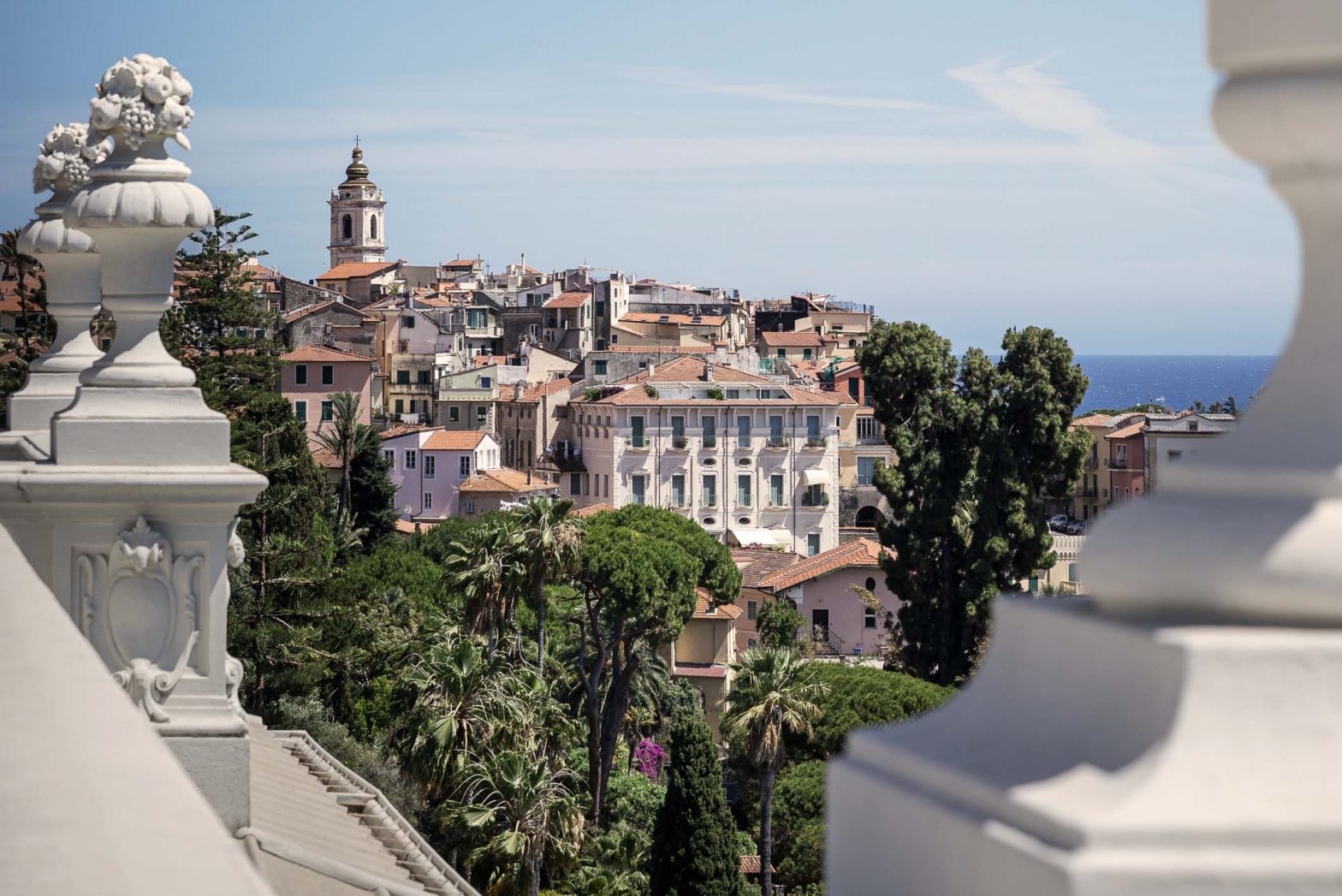
The light passes through the palm trees, settles on the facades of the villas, and reaches the sea, which changes color between one branch and the next. Traveling along the Riviera dei Fiori, certain views still invite us to slow down: a terrace overlooking the water, a garden that follows the slope, the outline of the ancient village above the rooftops. These are details you observe during a walk and that, little by little, inspire a more lasting thought: what would it be like to find them again every morning, opening the windows of your home?
Between the 19th and early 20th centuries, this stretch of Liguria became a favorite destination for European travelers, artists, and aristocratic families. Bordighera welcomed a large British community; Monet found new subjects for his paintings there; Queen Margherita of Savoy established a residence here, a place she remained faithful to until her death on January 4, 1926. One hundred years after her death, retracing these stories allows us to rediscover the reasons for an enduring attraction: a landscape capable of transforming a stay into a desire to return.
Retracing these events allows us to understand the Riviera through its legacy in the people and what those people left behind on the land. In the gardens, architecture, and cultural sites, we discern a welcoming spirit that continues to resonate with those seeking a home between Bordighera, Ospedaletti, and Sanremo.
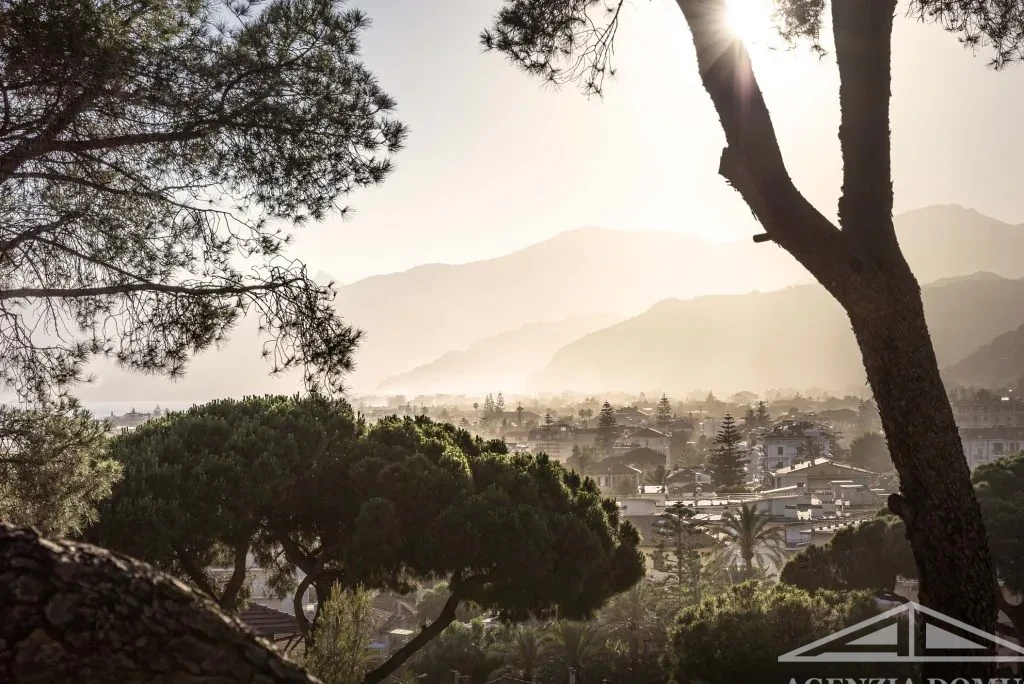
When the Riviera was a winter destination.
Before it became associated with summer holidays, Bordighera was already a popular winter destination for many British families. By the late 19th century, the number of English visitors had risen to around three thousand, outnumbering the local population of just over two thousand. Literature had also contributed to the town’s fame: Giovanni Ruffini’s novel Doctor Antonio , published in Edinburgh in 1855, had introduced this corner of Liguria to British readers. Even before the trip, therefore, it was a story that had sparked curiosity about the area.
Staying for an entire season meant bringing with it habits, interests, and social opportunities. The British community thus contributed to the creation of places that would leave a lasting mark on the city. In 1878, the Bordighera Lawn Tennis Club, considered the oldest in Italy, was founded. Initially, the game was primarily an opportunity to meet, spend time outdoors, and gather for tea. The tennis court became a part of the holiday experience as naturally as a stroll, forging relationships that were renewed season after season.
Even the books bear witness to this presence. The library, founded around 1883, thanks to the initiative and donations of English residents, was initially housed in the Anglican Church, then in the Bicknell Museum. The growth of the collections led to the construction of its own Victorian-style stone building in 1910. Today it is the International Civic Library: its columned entrance, opening onto the garden, preserves the memory of that community in its architecture.
The Clarence Bicknell Museum, founded in 1888 as a place of study and cultural encounter, also belongs to this history. The English scholar’s collections and the large ficus trees outside illustrate the connection between scientific curiosity and passion for nature, which animated a segment of Bordighera’s international society. Walking through these places today, the European holiday season becomes more tangible: it takes the form of a book consulted, an afternoon dedicated to sports, a garden in which to continue a conversation. Small rituals through which a distant destination had become, for many, a familiar environment.
Monet in Bordighera: the discovery of a light to chase.
Claude Monet had discovered the Riviera during a trip with Pierre-Auguste Renoir in 1883. He returned to Bordighera alone in early 1884 to devote himself to painting more regularly. Between January and April, he created over thirty paintings of the local landscape, alternating work outdoors with the search for new vantage points. In letters to his companion Alice, he recounted this daily exploration: finding a subject meant exploring the landscape, studying perspectives, and choosing how to capture such a rich landscape on canvas.
Having settled at the Pension Anglaise, Monet explored the Via Romana, the Vallone del Sasso, and the views of the old city from the hills. Among the places that most impressed him were the Moreno Gardens, where Mediterranean vegetation coexisted with exotic species. This abundance seemed almost unreal to him: in his descriptions, the garden took on the character of a surprising plant world, capable of continually offering new possibilities for painting.
This enthusiasm, however, was accompanied by a demanding quest. Monet longed to paint orange and lemon trees against the backdrop of the azure sea, but he wrote that he couldn’t find the arrangement he was looking for. This detail captures the concreteness of his work: faced with the beauty of the landscape, he continued to search for the shot capable of expressing what he saw. Reading it, one instinctively pauses to linger on a treetop, follow the outline of a branch, observe the point where the greenery allows the sea to emerge.
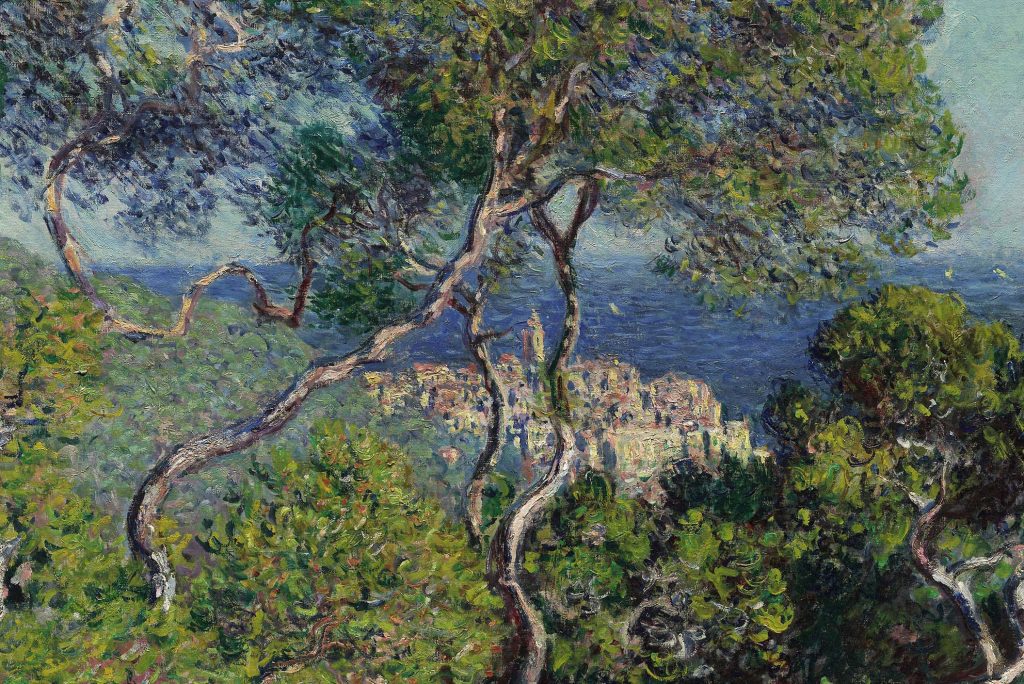
In the view of Bordighera preserved at the Barberini Museum, the village and the water are observed through the trunks of two pine trees. The roofs and vegetation are arranged on different levels, conveying the depth of the landscape. The choice of vantage point transforms a view of the city into a visual experience: one almost feels as if one has stopped along a path and discovered, among the trees, an unexpected perspective.
Monet’s Italian experience continued to live on in his paintings even after his return to France. Les Villas à Bordighera , now in the Musée d’Orsay, was created in his studio in Giverny from a smaller version painted on site. In Bordighera, however, a surviving portion of the ancient Moreno Gardens, along the Via Romana, is now dedicated to the painter.
The large 19th-century garden no longer exists in its original size, but this testimony allows us to rediscover a tangible connection with his stay. Canvases and places can thus accompany one another in discovering the city: the former suggest how to look, the latter invite one to take the time to do so.
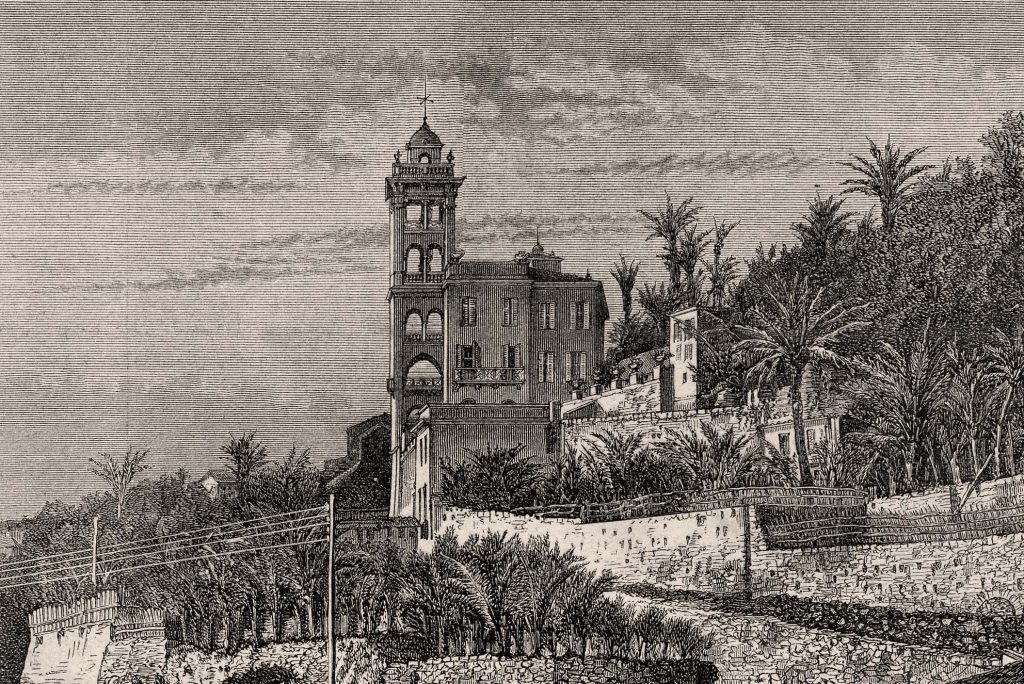
Queen Margherita and Bordighera: a bond to be rediscovered on the centenary of her death.
2026 marks the hundredth anniversary of the death of Margherita of Savoy, Italy’s first queen, who passed away on January 4, 1926, in her villa in Bordighera. This anniversary refocuses attention on a connection that is intrinsic to the history of the city and its surroundings: a residence surrounded by greenery, the park that surrounds it, the memory of a presence that contributed to the Riviera’s prestige in the 19th and 20th centuries.
The sovereign’s first visit to Bordighera dates back to 1879. Over the following years, her relationship with the city strengthened, culminating in the construction of Villa Regina Margherita, begun in 1914 within the grounds of Villa Etelinda. The new residence, in neo-Baroque style and elevated, gave lasting expression to this predilection for the Riviera. A home to which returning allows one to get to know a place through the passing of the days: the changing light in the rooms, the views of the garden, the paths that become familiar. The history of the villa invites us to understand the bond between Margherita and Bordighera even in this domestic dimension.
The city’s final farewell to the queen was accompanied by a large turnout. Documentation from the Civic Museums of Savona records that, as the coffin passed through Bordighera, residents threw flowers from terraces and rooftops. On January 10, 1926, the funeral convoy left the city for Rome: along the route, stations filled with people who came to pay their respects to the queen. Images from the Istituto Luce documented this outpouring, preserving the memory of a farewell that involved places and communities along the railway route.
Margherita was buried in the Pantheon in Rome. Her home remained in Bordighera, a testament to a relationship built over time. On the centenary of her death, this story offers an opportunity to observe the city more closely, recognizing in its architecture the choices and customs of the people who lived there. The Riviera’s charm also emerges from this: from its ability to become a personal place, to which one can associate a part of one’s life.
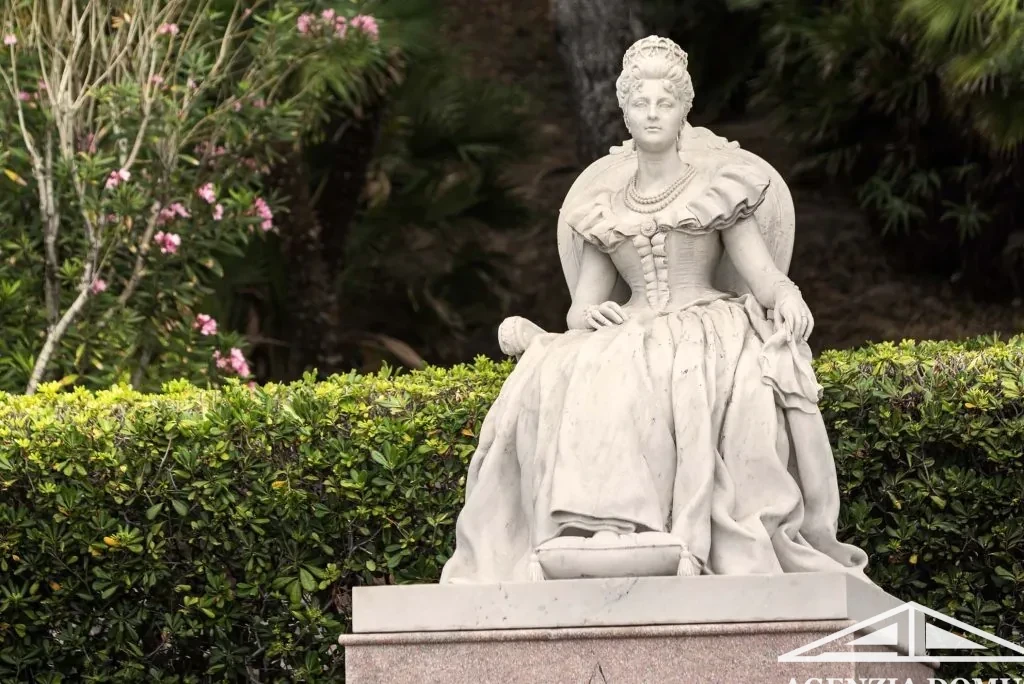
The Beodo walk and the ancient palm landscape.
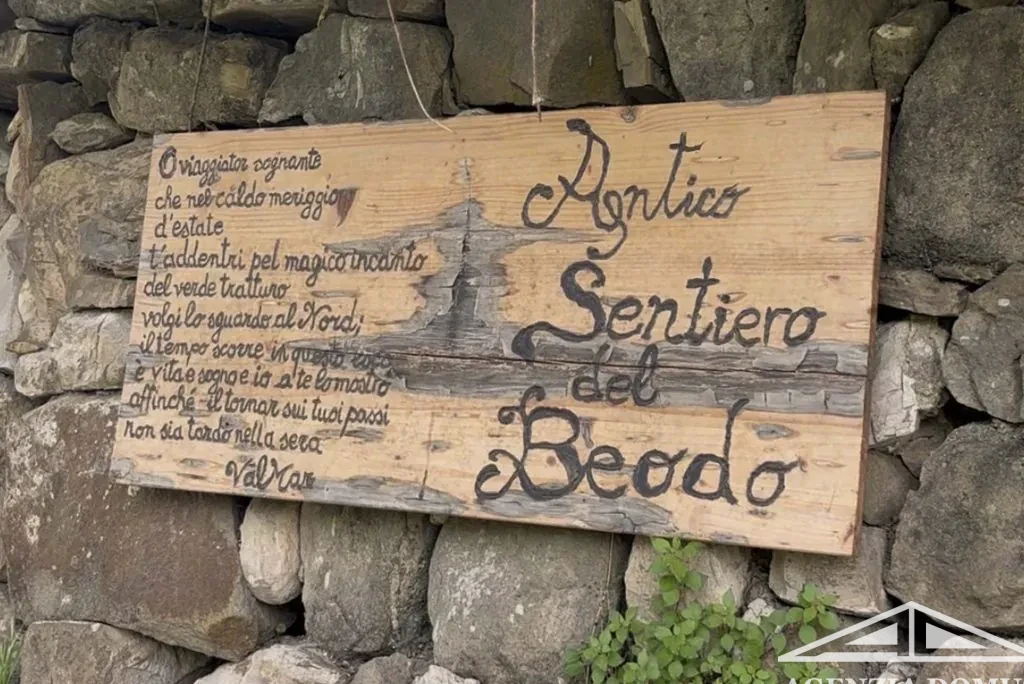
From the historic homes, Bordighera’s story continues along the paths that preserve its agricultural heritage. The Beodo trail follows the route of the ancient aqueduct that brought water from the springs of Monte Nero to the city. It extends for approximately three kilometers through olive groves, pergolas, and dry-stone walls, with views of the sea and the town. The still-visible stone channels recall the path’s original function and the labor required to distribute water, cultivate the slopes, and make this landscape habitable.
Along the Sasso River valley, the historic palm grove adds one of Bordighera’s most recognizable features to the promenade. Date palms, Phoenix dactylifera , belong to a tradition much older than 19th-century resorts: the history of the palm grove dates back to the Middle Ages. The book Palme di Liguria , edited by Claudio Littardi, identifies it as the historic palm grove of this species, considered the northernmost in the hemisphere. This peculiarity helps explain the amazement of travelers from Northern Europe at this Mediterranean landscape.
The beauty of palm trees is intertwined with a history of cultivation and trade. Their leaves were in demand for the Catholic celebrations of Palm Sunday and the Jewish holiday of Sukkot. The landscape that fascinated artists and visitors was therefore also the result of handed down knowledge, care, and productive activities. Observing it along the Beodo is like encountering this depth: behind the profile of the foliage, one recognizes a centuries-old relationship between the city, the land, and the people who worked it.
The route invites slow attention. A low wall accompanies your step, the vegetation changes your perspective, the sea reappears between the openings in the slope. The walk thus takes on the pleasure of a gradual discovery, made up of details that remain hidden from the seafront. It’s another dimension of the Riviera, intimate and close to its history, where even a short itinerary can become a habit, rediscovered with every visit.
The Hanbury Gardens and the desire to put down roots.
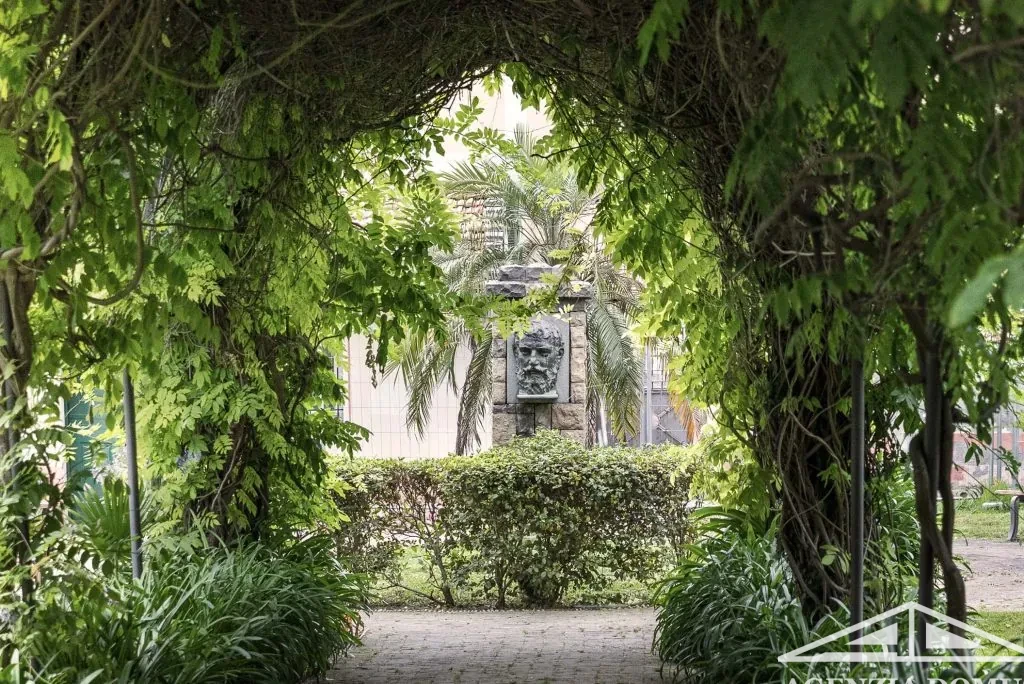
At La Mortola, the encounter between a foreign traveler and the Riviera took on a particularly enduring form. In 1867, Thomas Hanbury purchased the property from the Orengo family and began the work that would later give rise to the Hanbury Botanical Gardens. His brother Daniel contributed to the transformation, providing the scientific basis for the acclimatization project. Plants from faraway lands found a home on this promontory overlooking the sea, giving rise to a collection in which botanical curiosity combined with landscape design.
In 1868, Ludwig Winter became curator of the gardens. A gardener and landscaper, he participated in their creation and organized the maintenance of the nurseries, the seed collection, and the training of local staff. Within the property, beneath the ancient Roman road, the greenhouses and nursery garden were located : the nursery complemented the collections and cultivation work. Behind the garden’s apparent naturalness, one can discern a patient workmanship based on observation, skill, and attention to the conditions necessary for the plants’ growth.
The value of this place encompasses its botanical variety and the relationship between vegetation, architecture, and landscape. The property was placed under conservation by the Superintendency for its architectural, landscape, and cultural value. Walking along its paths means entering an environment where the garden envelops the buildings, follows the slope, and continually opens up new vistas of the sea. The care of the plants and the built spaces contribute to the same experience of beauty.
From 1918, with Cecil and Dorothy Hanbury, landscape composition took on greater importance. Dorothy’s interventions opened up views, enhanced panoramic points, and studied the juxtaposition of blooms, continuing the dialogue between botanical research and aesthetic sensibility. The garden was also reimagined through the movement of those who traversed it: a bend in the path, a pause before a plant, an opening toward the water could change the perception of the whole.
The Hanbury family’s story illustrates how deeply a place can influence a family’s plans. Planting a tree, following its growth, and imagining the garden for years to come means building a bond with the future. At La Mortola, that bond has spanned generations and continues to be visible in a landscape to which time, knowledge, and care have been dedicated.
Villas and residences: when the landscape becomes a lifestyle choice.
Among the stories surrounding this attraction, that of Charles Garnier holds particular significance. The architect, renowned for the Paris Opera, purchased land in Bordighera in 1871 to build his own holiday home. He chose the Arziglia area, near the sea, where Villa Garnier was built. The garden and the house became part of an international community: in his son Christian’s manuscripts, the invitation to play to visit the garden appears translated into thirty-nine languages.
It’s a detail that effectively captures the character of that residence. The private residence fostered the pleasure of hospitality, and the garden became an opportunity for gatherings. To understand the architecture of the Riviera, it’s worth starting from this relationship between seclusion and openness: the ability to retreat into one’s home while maintaining, just beyond the threshold, a connection with the landscape and the world.
Villa Garnier and Villa Regina Margherita, with their different histories and architecture, reveal how the choice to inhabit the Riviera contributed to shaping its landscape. The parks, the location of the homes, and the relationship with the sea bear the mark of those preferences. Viewing them today allows us to understand how Bordighera’s charm was also built through personal choices, which over time became part of the city’s identity.
Sanremo, between the memory of the empress and the home of Alfred Nobel.
In Sanremo, memories of aristocratic vacations still accompany a seaside stroll. Corso Imperatrice owes its name to Maria Alexandrovna, wife of Tsar Alexander II, who spent the winter of 1874-1875 in the city. During her stay, the sovereign donated the palm trees intended for the avenue to the city: a gesture that linked her presence to an element that has become part of Sanremo’s image. The name of the promenade preserves this connection between hospitality, landscape, and memory.
Over time, the Russian presence also took on a communal and religious dimension. The Russian Church, inaugurated in December 1913, was born from the initiative of the Orthodox community and the fundraising effort to provide it with its own place of worship. Its domes add an instantly recognizable sign of that international history to the urban landscape. Observing them while strolling allows one to understand Sanremo as a city where different cultures have found space, leaving behind testimonies that continue to be a part of daily life.
Another story leads to Villa Nobel. The Swedish scientist chose Sanremo for the final years of his life, continuing his studies there, and died in his home on December 10, 1896. His presence adds a different dimension to the Riviera’s story: alongside aristocratic sojourns, a history of work and research.
Between the promenade dedicated to the empress and the scientist’s home, a city capable of accommodating diverse aspirations emerges. Getting to know it means following these traces and discovering, behind familiar places, the people who helped shape its character.
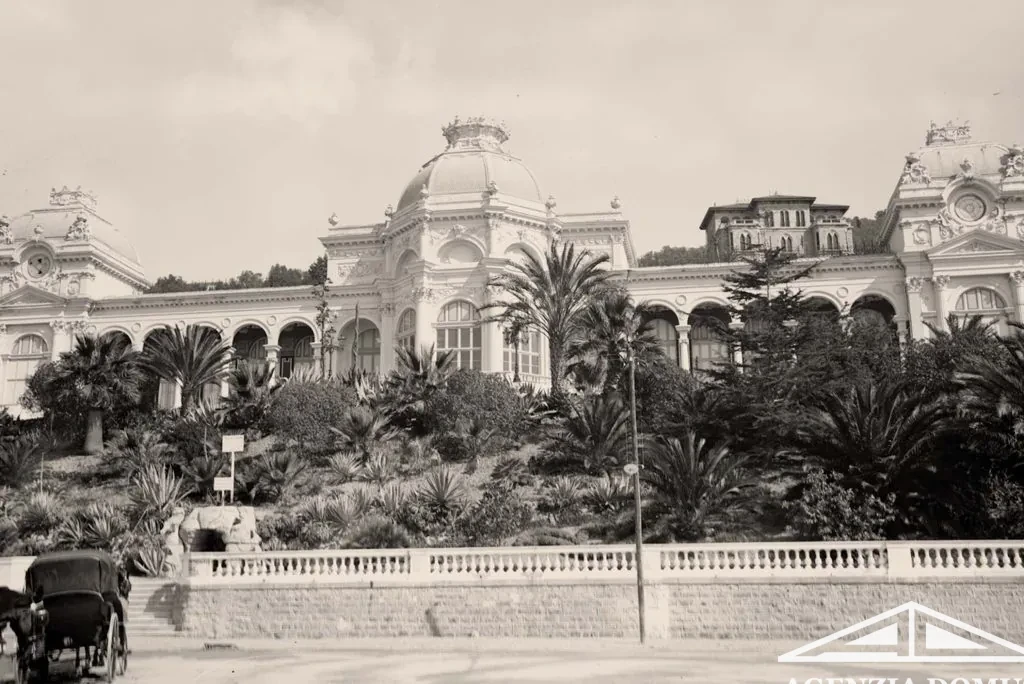
Ospedaletti and the European holiday season.
Between Sanremo and Bordighera, Ospedaletti illustrates another aspect of this transformation. In the 19th century, its climate and environmental characteristics attracted European tourists; the presence of Russian, English, and French personalities contributed to enriching the village with gardens, avenues, and prestigious buildings. The town gradually took on the characteristics of a place designed for relaxation, where outdoor spaces played as important a role as the residences.
Villa Sultana, the three-domed building on Corso Regina Margherita, dates back to this period. It housed a casino and was a meeting place for the international elite who frequented the Riviera. Its history documents the social aspect of the holiday: in addition to relaxation and strolls, guests sought opportunities for socializing and entertainment.
The connection between urban transformation and landscape is found in the Gardens of the Société Foncière Lyonnaise. Designed in 1892 by the Nice-born hybridizer Luigi Isnart on land formerly owned by the Aschero family, they demonstrate the attention paid to greenery in the development of the town. Understanding this origin changes the way you view Ospedaletti: a tree-lined avenue or a garden becomes part of a welcoming project that has matured over time. During a stroll, history can emerge through these details, while the sea remains nearby and accompanies the transition from one place to another.
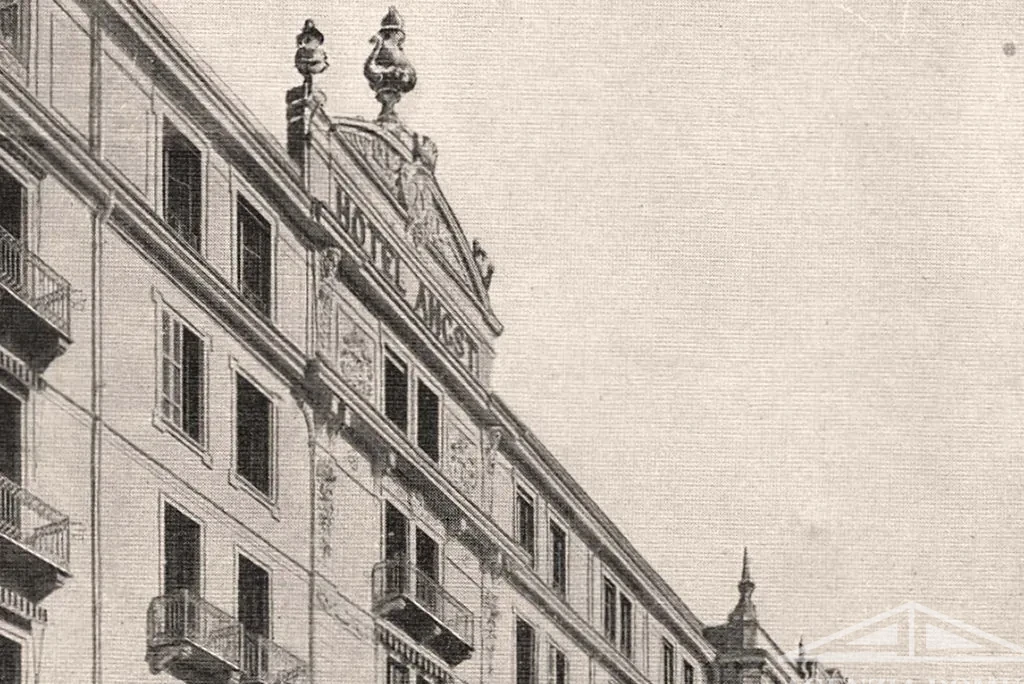
Living on the Riviera dei Fiori today, within a story that continues.
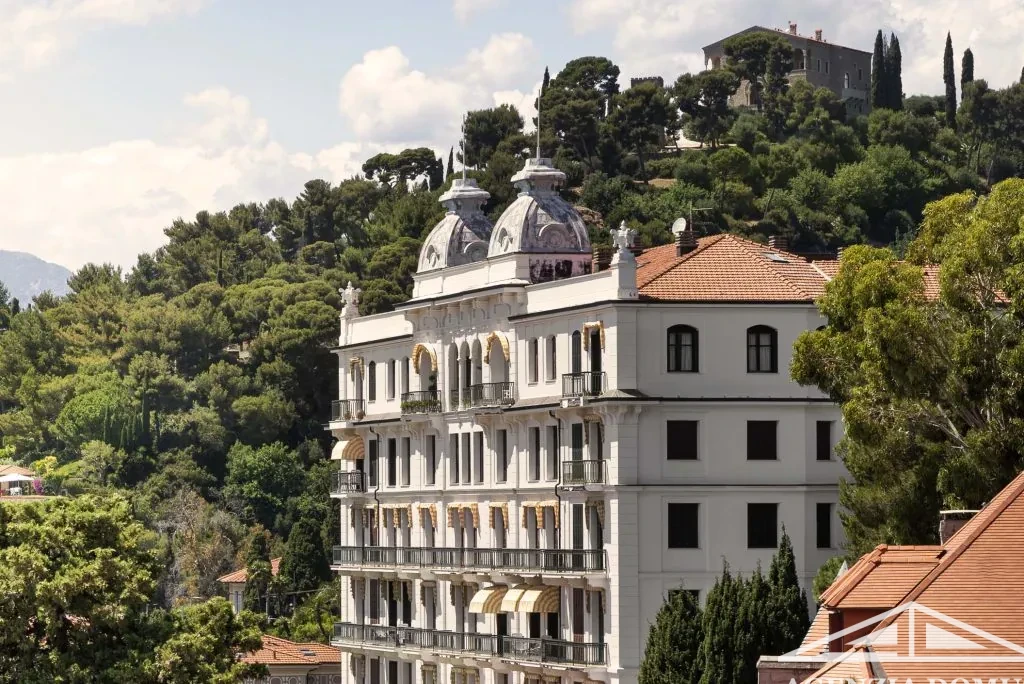
The legacy of European vacations also informs the way some buildings are reimagined for contemporary living. In Bordighera, the transformation of the former Hotel Angst into residences represents an example of this dialogue between architectural heritage and new domestic needs. We recounted the process in our in-depth feature on the Angst Bordighera underwent a transformative process from a luxurious hotel to a fabulous residence.
The historic charm of a place becomes personal when it meets the habits of its residents. For some, being able to walk to the sea is important; for others, having a private terrace or an open view from the living area. A second home can be the place for long stays, last-minute weekend getaways, or days spent with children and friends. Understanding how you want to experience the Riviera helps you identify the right property, giving precise meaning to features that, in a listing, might seem merely descriptive.
For over fifty years, Domus has been supporting those looking to buy or rent a home in this area, with a deep-rooted presence on the Riviera and a sales and rental assistance service. This experience allows us to guide you through your search while balancing the home and its surroundings.
Contact Domus to tell us how you’d like to enjoy your home between Bordighera, Ospedaletti, and Sanremo . We’ll start with your desires, the spaces you need, and the time you’d like to spend here. The landscape that invites you to linger today could become the one you’ll be happy to return to tomorrow.